

























































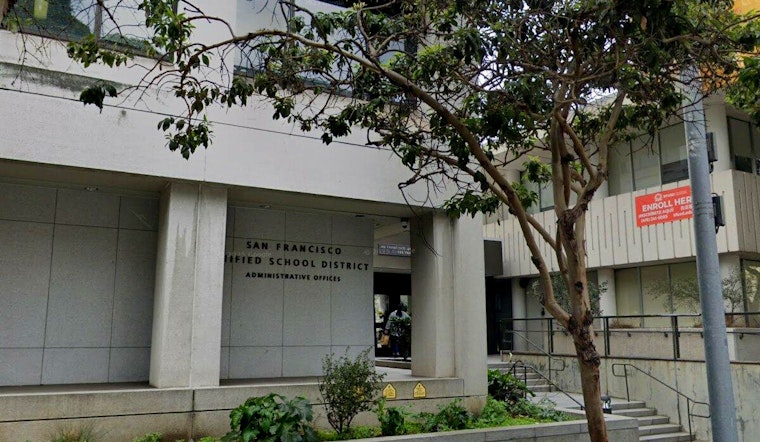
San Francisco Unified School District's sweeping $114 million budget cuts have eliminated crucial student internship programs and forced families into an increasingly unequal landscape where wealthy students maintain access to enrichment opportunities while disadvantaged youth lose critical pathways to success. The district's decision to slash its 500-student internship program—which provided real-world experience in health, culinary arts, education and other career pathways—has left a "big fat zero" in the budget line where the popular program once thrived.
The cuts, driven by crushing budget deficits and declining enrollment, represent the most significant reduction plan pursued by any government entity in San Francisco in two decades. Superintendent Maria Su has eliminated 535 positions across administrative and school staff to save $114 million, according to The Standard, with the district under state financial oversight since its budget crisis deepened.
"I grew up poor and I know that access to education and programming is truly the key to a better future," Su explained to the San Francisco Chronicle. "Through exposure you get experience. Through experience you get confidence." Yet these opportunities are increasingly becoming privileges of wealth rather than public education guarantees.
Widening Opportunity Gap
The elimination of district-funded extracurriculars exacerbates an already stark disparity. Children from wealthier families are twice as likely to participate in sports, clubs, or lessons than those living in poverty, according to Census data analyzed by the Chronicle. This gap starts as early as kindergarten, when many five-year-olds begin soccer or piano lessons while their less-advantaged peers remain sidelined.
An Ohio State University study found that if mothers had a high school education or less, only 47% of their children participated in sports, compared to 96% of kids whose mothers had graduate or professional degrees. California's broader education funding crisis has reached districts statewide, with many facing their first budget-cutting challenges in over a decade following years of steady revenue growth, as reported by Edunomics Lab.
Phil Ginsburg, executive director of Recreation and Parks, has acknowledged the city's struggle to address these disparities. Despite efforts to triple low-income participation at Camp Mather—the city's family camp near Yosemite costing $2,200 per week for a family of four—only 46 of 1,205 cabin reservations this summer received subsidies, representing just 4% of participants.
Community Organizations Step In
With public schools forced to focus on basic instruction, community organizations have become critical safety nets for disadvantaged families. Boys & Girls Clubs of San Francisco, headquartered at 380 Fulton Street, provides after-school and summer programs including financial literacy camps that serve as lifelines for working families.
During a recent "Fish Tank" entrepreneurship competition at UC Law San Francisco, middle school students pitched inventions ranging from expandable tennis shoes to dissolving chewing gum called "DisGum." Carl Levy III, a financial literacy instructor, noted the contrast: "They weren't gifted with the opportunity of 401K parents or of being trust fund babies, the kids who have piano lessons. But these kids had the opportunity to be here."
The program, funded through partnerships between the University of San Francisco and Boys & Girls Club with support from the Silk Family Investment Institute, exemplifies the kind of enrichment now disappearing from public schools. Boys & Girls Clubs of San Francisco offers year-round programming for ages six to 18 with membership fees ranging from just $20 to $370 annually.
Federal Funding Uncertainty Compounds Crisis
The district's challenges have intensified under the Trump Administration's education policies. California schools are missing nearly $811 million in federal grant money that Congress approved but the administration has refused to release, according to CalMatters. These funds typically support after-school programs, enrichment activities, and services for students learning English.
"The harm of this decision is immediate," said Tatia Davenport, chief executive of the California Association of School Business Officials. "By withdrawing those funds, our district leaders will be forced to reduce staff, delay programs and cancel services." The cuts particularly impact 21st Century Community Learning Center grants, which provide $146.6 million statewide for after-school programs, serving as the primary funding source for middle and high school enrichment.
Long-term Implications
Education experts warn that cutting extracurricular programs undermines the very experiences that build college applications, develop leadership skills, and create social connections. Bay Area internship opportunities remain available through private organizations and selective programs, according to CollegeVine, but these typically require family resources or exceptional academic performance that many SFUSD students cannot access.
Michael Petrilli of the Thomas B. Fordham Institute suggested expanding school voucher concepts to enrichment activities, allowing public funds to follow students to tutoring and extracurricular programs. The Trump Administration's proposed tax credits for scholarship donors could theoretically support such initiatives, though implementation remains uncertain.
As Su works to restore fiscal stability and exit state oversight, the district has balanced its budget but faces additional cuts in 2026-27, as reported by The Standard. School closures remain possible as enrollment continues declining, potentially further reducing opportunities for San Francisco's most vulnerable students.
The elimination of internships and extracurricular programs represents more than budget line items—it removes rungs from the ladder of opportunity that public education once provided to help level an unequal playing field.





