

























































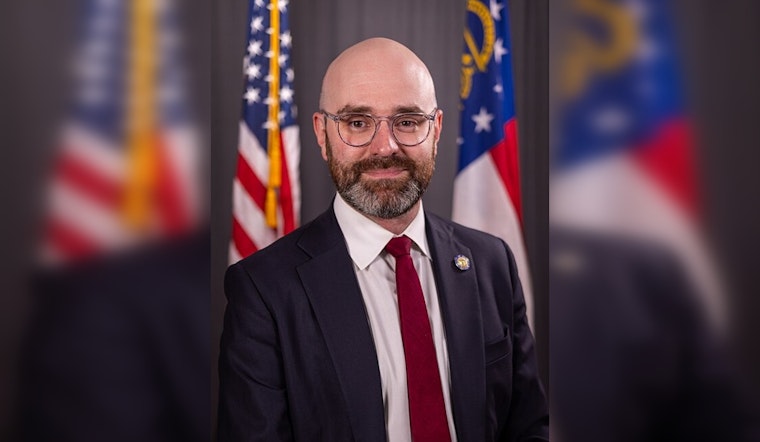
In a significant turn of events, Atlanta journalist Mario Guevara, who has become a well-known voice in immigration reporting, faces deportation following a recent court decision. Senator Josh McLaurin of Sandy Springs spoke out against the ruling on Friday, addressing the media with a strong statement about the case and its implications.
Following a career spanning over two decades in the United States, Guevara now confronts the stark reality of being sent back to El Salvador. His situation gained notoriety after being detained by ICE on June 18, as he was performing his duties as a journalist. While the charges against him were eventually dropped, Guevara remains in custody, with the wheels of deportation turning ever faster. McLaurin, criticizing the decision, conveyed his perspective on the ruling, "Today, an immigration agency that takes orders from the Trump administration reversed 13 years of legal proceedings to unilaterally deport journalist Mario Guevara. This is yet another example of the Trump administration's pervasive attempts to stifle journalists and media from doing honest reporting or speaking unfavorably about the administration. This is one of the most dangerous periods for free speech in American history," as reported by Senate Press.
This announcement has sparked outrage and concern among free speech advocates and fellow journalists alike, highlighting the growing tensions between press freedoms and governmental authority. Guevara's work, notably on immigration, earned him a considerable following in Atlanta and had resonated on a national level, emphasizing the human side of a complex and contentious aspect of American policy. Detained while wearing his press badge, Guevara's commitment to journalism was clear even at the moment of his arrest.
The case strikes at the heart of ongoing debates surrounding immigration enforcement and its impact, not only on those caught in its crosshairs but also on the broader realm of free press in the United States. McLaurin's statement acts as a rallying cry for those who fear the erosion of such foundational rights. The implications of Guevara's deportation stretch beyond one individual's circumstances, touching upon the crux of how America will navigate the delicate balance between national security and the sanctity of its first amendment rights.



