

























































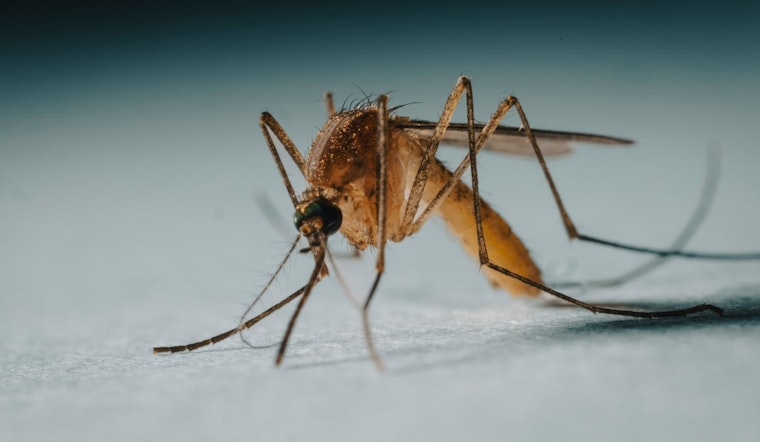
The Boston Public Health Commission (BPHC) has confirmed the year's first human case of West Nile Virus within the city limits. According to their announcement, a local man in his 50s was diagnosed with the virus but has not traveled outside of Boston recently. He's currently receiving treatment, and fortunately, his health is on the upswing.
It's important to note that previously, the risk level for West Nile Virus in Boston was ramped up to "high" by the Massachusetts Department of Public Health. Predicting as it may seem, the number of mosquitoes testing positive for the virus has been ticking up throughout several neighborhoods in Boston this past summer, prompting this elevated concern. The virus, for those who might not be in the know, is transmitted to humans via bites from infected mosquitoes.
Now is as good a time as any to remember that there are everyday actions people can take to minimize their risk of contracting West Nile Virus. For starters, certain populations, such as individuals over the age of 50 and those who are immunocompromised, should try to stay indoors during peak mosquito hours, which span from dusk to dawn. By eliminating standing water — think bird baths, unused flower pots, and kiddie pools on their last leg — you're cutting off mosquito breeding grounds right at the source. Also, a regular clean-out of your gutters can prevent the buildup of debris that tends to attract these pesky insects.
Protective clothing, such as long sleeves and high socks, can serve as a physical barrier between your skin and mosquitoes, while EPA-approved insect repellents like DEET should handle the rest. "Even as we mark the start of fall, it remains important to take common-sense steps to protect yourself from mosquito-borne illnesses," Dr. Bisola Ojikutu, Commissioner of Public Health for the City of Boston, stressed in a statement obtained by Boston.gov. Adequate window and door screens are also critical to keeping these flying nuisances out of the home and off your skin.
Thankfully, not everyone bitten by an infected mosquito will feel the sting of West Nile Virus symptoms. But when symptoms do present, they can range from headaches and nausea to more severe neurological effects in high-risk groups, such as confusion or muscle paralysis. Health officials advise that anyone experiencing these symptoms should seek medical attention right away. For more in-depth details on West Nile Virus and ways to stay safe, the BPHC website has got the goods.





