

























































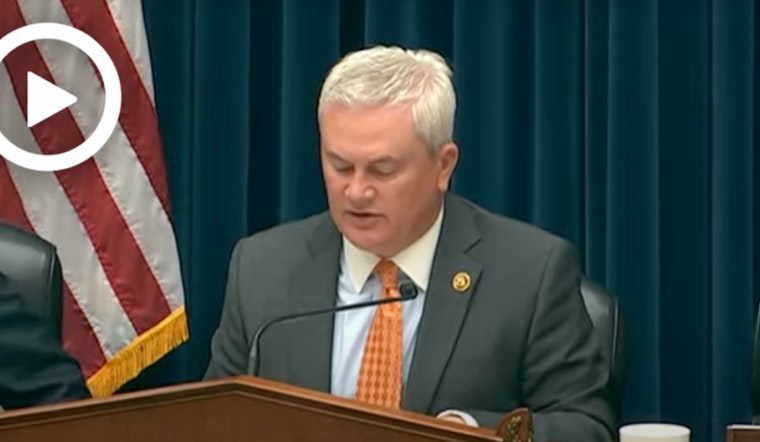
Transparency and accountability are at the forefront of a House investigation as Chairman James Comer (R-Ky.) of the House Committee on Oversight and Government Reform pushes for detailed scrutiny into the federal government's past handling of the Jeffrey Epstein and Ghislaine Maxwell case. In a recent meeting before the House Rules Committee, Comer made his stance clear while advocating for House Resolution 668, a move that could shed light on potential governmental missteps, according to a statement on the House Oversight Committee's official website.
In a heartfelt gathering, survivors shared their experiences with Epstein and Maxwell, prompting Comer to reflect on the government's failure to protect them. "Their stories are heartbreaking," Comer stated. They endured not just egregious crimes but also a betrayal by those sworn to protect them, a sentiment echoed by many who seek justice. The investigation, now six weeks in progress, has seen the Oversight Committee vigorously subpoenaing documents and testimonies with the hope of uncovering the truth behind the FBI's response, or lack thereof, since as early as 1996.
The depth of the investigation promises to be thorough, targeting both key documents and high-profile individuals related to the Epstein and Maxwell saga. Notably, the Department of Justice (DOJ) has complied with the Committee's subpoena, producing nearly 34,000 pages of documents, with a commitment to release more, an action that begins to paint a picture of the federal government's involvement and previous inaction.
Former Attorney General Bill Barr has already been deposed, among other officials, signaling a robust inquiry process that could bring renewed hope to the victims. Comer persisted in his push for support from the House, emphasizing the resolution's alignment with the victims' desires for transparency and closure. "This is the most thorough investigation into Epstein and Maxwell to date. And we are getting results," Comer assured.
The narrative of Epstein and Maxwell is one rife with criminality and conspiracy, and as the House Committee steps up its inquiry, there remains a collective yearning among victims and observers for truth and retribution. Comer's urge to back House Resolution 668 is not just an administrative step, but a beacon for those who have long-awaited justice. With resolved voices through legislative corridors, the wheels of justice, albeit delayed, begin to turn with a promise of long-sought vindication for the survivors.




