

























































In a recent move, the City Council has unanimously decided to defy Mayor LaToya Cantrell's veto, pushing forward a $5 million allocation to LSU. This was only one of the key decisions made during the council's regular meeting on Thursday, as reported by the council's official news release. The funds, earmarked for university usage, are a portion of the city's unencumbered surplus, demonstrating the council's continued support for local education and institutional collaboration.
Moreover, a new amendment to the City Code was adopted, aiming to directly safeguard city employees by mandating rest breaks amid the threat of extreme heat. This legislative action signifies the council's commitment to not just adequately fund educational endeavors but also to prioritize the well-being and safety of its workforce. Such measures have become increasingly significant in the face of climbing temperatures and changing climate conditions within the region.
The council's actions extended beyond financial appropriations and workplace protections. In their meeting, as noted by the council's summary, a firm stance was taken against the proposed Alabo Street Sunrise food grain terminal. Through Resolution R-25-463, which faced no apparent opposition from council members, the City Council amplified voices from the Lower Ninth Ward community, which have raised environmental and health concerns regarding the terminal's potential impact.
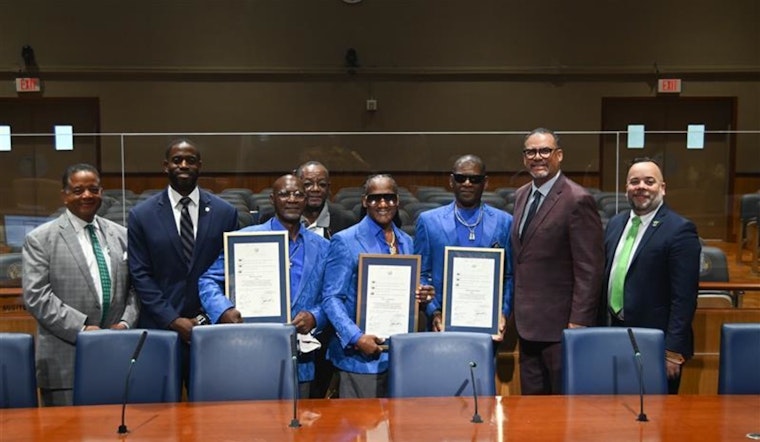
Special recognitions were also a part of the council's agenda. The musical heritage of New Orleans was celebrated as the BRW New Orleans Band received a nod for its influential presence in the music scene, complemented by a Lifetime Achievement Award honoring over five decades of contributions. Meanwhile, a mark of civic virtue was awarded to the United Cajun Navy, specifically Jon Gusanders, in recognition of their relentless effort to, tragically, locate Bryan Vasquez, a 12-year-old boy who had gone missing for several weeks. This somber note underscored the critical role played by volunteer organizations in times of crisis.
Another highlight of the council's meeting was the honoring of Lt. Gen. Honoré. His leadership, made profound in the aftermath of Hurricane Katrina, etched a legacy that continues to resonate with the city's residents and the nation. The General was saluted for his role in bringing order during chaos and highlighting New Orleans' resilience in the face of natural disasters.
These various measures, accolades, and ceremonial moments reflect a broader narrative of a city in active engagement with its constituents and dedicated to recognizing those who contribute to its cultural, societal, and emergency response fabric, as detailed in the summary by council.nola.gov.



