

























































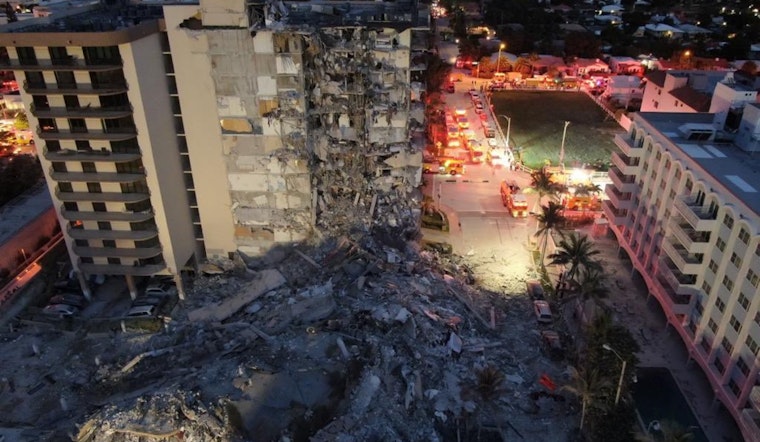
The tragedy that struck in the early hours of June 24, 2021, when the Champlain Towers South in Surfside, Florida, succumbed to a fatal structural failure, has been subject to intense scrutiny over the past four years. The latest findings from the federal investigation point to the pool deck as the origin of the disaster that claimed 98 lives. As per NBC Miami, investigators from the National Institute of Standards and Technology (NIST) shared insights about the early warning signs indicating significant distress in the building some months prior to its collapse. This included a sliding glass door stuck in a nearly closed position about a month before the incident, severe distress in a masonry planter wall and planter box on the pool deck, and a jammed gate that sunk one inch just a week before the collapse.
While a stuck door or a single crack don’t necessarily spell doom for a building, in the case of Champlain Towers, these were part of a cascade of distress indicators that, unfortunately, went unnoticed until it was too late. According to the federal probe, these early signs were all concentrated around the pool deck and street-level parking deck area, which had a history of previously repaired cracks and issues along construction joints. Associate lead investigator Glenn Bell commented to ABC News, "Recent work indicates that it is more likely that the failure started in a pool deck slab-column connection than we considered in June.”
Investigators have confirmed that the pool deck was poorly designed, featuring areas with less than half of the strength required by the building code and misplaced slab reinforcement that made the deck vulnerable to failure. These conditions, which seem to have persisted from the moment construction was completed 40 years earlier, likely contributed predominantly to the collapse, as Bell stated in a presentation slide. The findings are a grim reminder of the fatal consequences that can arise from overlooking structural flaws.
Despite the magnitude of the collapse, the message from the engineers is one of caution, not panic. They highlighted the importance of recognizing and addressing building distress signals early to prevent such disasters. Martin Langesfeld, whose sister and brother-in-law perished in the collapse, expressed frustration over the protracted investigative process. "Four years. 98 dead. Nearly $40 million tax dollars spent, and we still have no answers and no accountability. That should be the media headline," Langesfeld told ABC News. The final investigative report, initially expected in 2025, has been delayed to the following year, further extending the period families have to wait for closure and answers.
NIST's upcoming recommendations, anticipated for release next summer, are hoped to outline actionable measures to identify signs of structural distress more effectively and to prevent tragedies similar to the Surfside collapse.




