

























































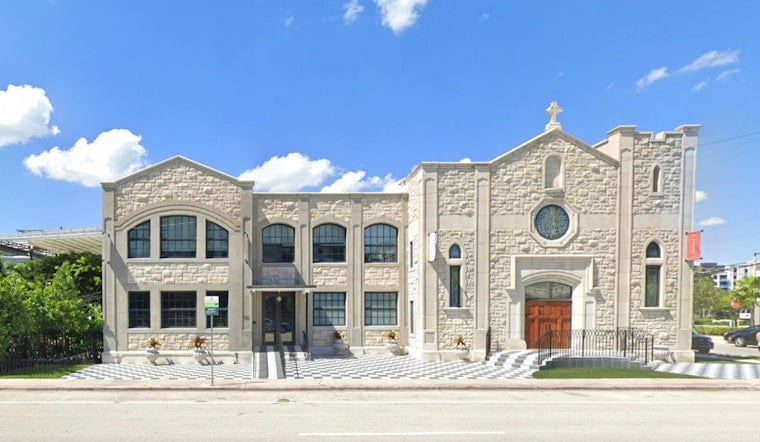
A stone building that has stood in Fort Lauderdale for more than a century, and once served as the city's first Roman Catholic church, is now pouring cocktails and carving prime rib. The century-old structure at 441 NE Third Avenue in Flagler Village has been converted into Jay's Steakhouse, a restaurant that its owners describe as combining historic charm with food and entertainment, according to WPLG Local 10.
The building's journey to becoming a steakhouse began in April 2025, when YES Hospitality Group president Jay Shirodkar signed a lease for 9,500 square feet inside the historic structure, as reported by The Real Deal. Native Realty represented both Shirodkar and the landlord entity, URBN Flagler LLC, in the transaction, per the same outlet's reporting.
From Las Olas Sanctuary to Flagler Village Landmark
The building's roots stretch back to 1922, when it was constructed on Las Olas Boulevard as St. Anthony's, making it the very first Roman Catholic church in Broward County, according to historical records published by History Fort Lauderdale. Built in a Romanesque stone style, the church eventually outgrew its space, and in the late 1940s a Lutheran congregation purchased the structure for $1 and relocated it brick-by-brick to Flagler Village, rededicating it in 1949 as First Evangelical Lutheran Church, History Fort Lauderdale reports.
The Lutheran congregation operated at the Third Avenue address for decades before selling the property in 2016. After facing potential demolition, the building was designated a local historic landmark, a status that has preserved its Romanesque stone facade, vaulted ceilings, and stained-glass windows through subsequent redevelopments, according to documentation from the Fort Lauderdale CRA. Developer Taho Investments bought the property in 2016, setting the stage for its adaptive reuse.
A Nightclub Predecessor Paved the Way
Jay's Steakhouse was not the building's first attempt at commercial reinvention. In December 2021, hospitality operator David Cardaci opened a dual concept inside the sanctuary called Holly Blue restaurant paired with The Angeles, a two-story, 6,000-square-foot nightclub, following more than two and a half years of pandemic-era conversion work, according to a report from Void Acoustics. That venture established the space as a dining and nightlife destination before Shirodkar's group took over the lease.
Today, Jay's Steakhouse keeps the sanctuary's original arched windows and vaulted ceilings intact, but pairs them with dark leather banquettes, red velvet curtains, and three distinct cocktail bars, as detailed by the Miami New Times. The venue functions as both a chophouse, complete with tableside prime rib trolleys, and a late-night speakeasy once the dinner crowd thins out.
Owner Frames the Church as a Metaphor
The property remains owned by URBN Flagler LLC, led by developer Itay Avital, who had already repurposed the site into a multi-tenant commercial property five years earlier, Bisnow reported in April 2025. Local brokerage Native Realty has consulted on the building's adaptive reuse for five years, per Bisnow's account.
Speaking to World Red Eye in May 2025, Shirodkar said the historic building serves as a metaphor for his restaurant, honoring traditional hospitality while updating the experience for modern diners. He emphasized that the protected historic structure offers character in a rapidly densifying part of downtown Fort Lauderdale, according to the same interview. YES Hospitality Group also owns and operates other South Florida dining concepts, including Naked Taco and Riviera, the Miami New Times notes, with Jay's Steakhouse standing as one of the group's largest and most ambitious projects to date.
Part of a Nationwide Wave of Church Conversions
Fort Lauderdale's steakhouse-in-a-sanctuary is not an isolated case. A November 2025 report by the International Council of Shopping Centers estimated that up to 100,000 houses of worship across the country could close over the next decade out of roughly 400,000 nationwide, a trend the organization says is driving a surge in church-to-retail conversions. Declining attendance has made historic church properties like this one prime targets for adaptive reuse, according to the ICSC report.
For now, the century-old stone walls that once held Sunday Mass and Lutheran services hold dinner reservations instead, with the building's landmark status ensuring its facade, vaulted ceilings, and stained-glass windows remain visible to diners sipping cocktails where a congregation once gathered.



