

























































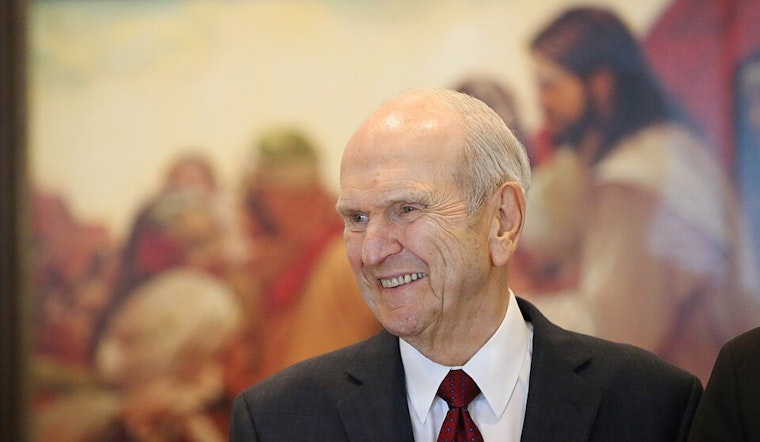
Russell M. Nelson, the centenarian president of The Church of Jesus Christ of Latter-day Saints, died late Saturday night, as announced by the church. Nelson, who ascended to the faith's presidency in January 2018, passed away just after 10 p.m. at his Salt Lake City home, shortly after celebrating his 101st birthday on September 9. Renowned for both his medical career as a heart surgeon and his dedicated service to his church, Nelson leaves behind a legacy marked by significant changes within the religious institution.
During Nelson's tenure as the 17th president of the church, and also its oldest, he initiated numerous reforms. Before his death, he oversaw major policy shifts, including the reversal of a controversial policy regarding the baptism of children of same-sex couples, and he deepened the church's engagement with civil rights issues, according to KUTV. His presidency was not without its bold moves; Nelson called for the church's disassociation with the commonly used nicknames "Mormon" and "LDS," arguing for the importance of the institution’s full name, as detailed by the Salt Lake Tribune.
An outpouring of admiration and reverence has followed the news of his passing. President Dallin H. Oaks, the First Counselor in the First Presidency, described Nelson as "the gentlest and sweetest person you could ever hope to associate with," expressing the high regard in which Nelson was held by those who worked with him, as reported by FOX 13.
Nelson's journey from the medical field to the pinnacle of church leadership was extraordinary. As a surgeon, he performed Utah’s first open-heart surgery in 1956, before eventually joining the Quorum of the Twelve Apostles in 1984. His leadership over the years has been characterized by a progressive vision for the church, prompting changes to traditional practices and reshaping some of its most foundational policies, noted by KUTV. Notably, Nelson was a figure of reconciliation, as seen through his meeting with Pope Francis at the Vatican and the establishment of a continuing dialogue with the NAACP as a stand against racism and abuse.





