

























































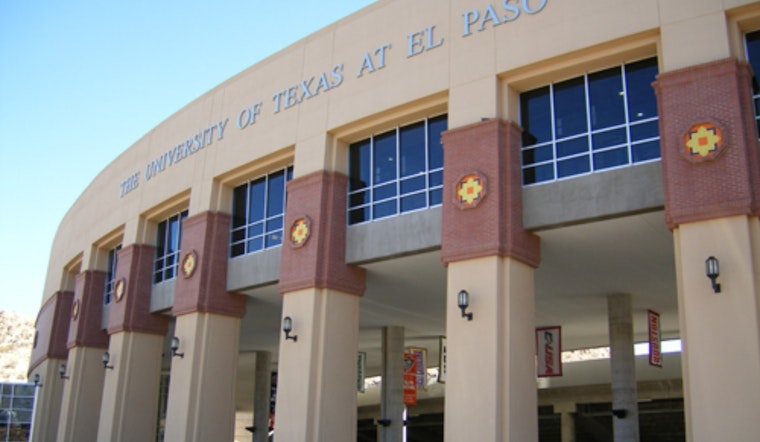
In a significant push to make lunar expeditions more precise, Dr. Jose Hurtado of the University of Texas at El Paso is part of the team creating detailed maps of the moon's south pole, as reported by UTEP Newsfeed. This initiative is part of a larger Lunar Mapping Program (LMAP) to prepare astronauts for the Artemis missions aimed at deepening our understanding of the moon. With the first human landing in over half a century slated for 2027 on the previously unexplored lunar south pole, these maps are considered pivotal. Hurtado, an expert from the university's Department of Earth, Environmental and Resource Sciences, shared that high-quality maps are "critical" for answering scientific questions and ensuring the success of such missions.
The project's novelty is not lost on the scientific community, harboring eagerness for insights into the moon’s enigmatic origins and potential water resources. Hurtado, while working with cutting-edge technology, explained that mapping could unveil how planetary surfaces evolve. According to UTEP Newsfeed, "The water is of interest not just scientifically but also operationally as it is a potential critical resource to enable sustainable development exploration and habitation of the moon." Indicative of a greater vision, these resources could be the bedrock for sustained lunar presence.
Leveraging data obtained from the Lunar Reconnaissance Orbiter, alongside artificial intelligence and GIS software, the LMAP team plans to revolutionize how the lunar landscape is visualized, aiding both human and robotic explorers. Hurtado, also involved with NASA’s Artemis II and III Science Teams, elucidated, "The LMAP approach can be directly applied to making the maps used for planning and executing Artemis lunar exploration," as per UTEP Newsfeed. Beyond mapping, Hurtado is set to assist in mission simulations and provide real-time scientific support to astronauts during the upcoming missions.
Before the anticipated 2026 Artemis II mission, where astronauts will orbit the moon, Hurtado will be immersed in mission simulations at the NASA Johnson Space Center. His efforts will extend to operating within NASA’s Science Evaluation Room during the Artemis III mission, aimed at landing humans on the lunar surface. "Making geologic maps is a critical step in answering scientific questions about the moon, as well as preparing for the logistics of lunar exploration and planning the activities that astronauts will conduct on its surface," Hurtado told UTEP Newsfeed.



