

























































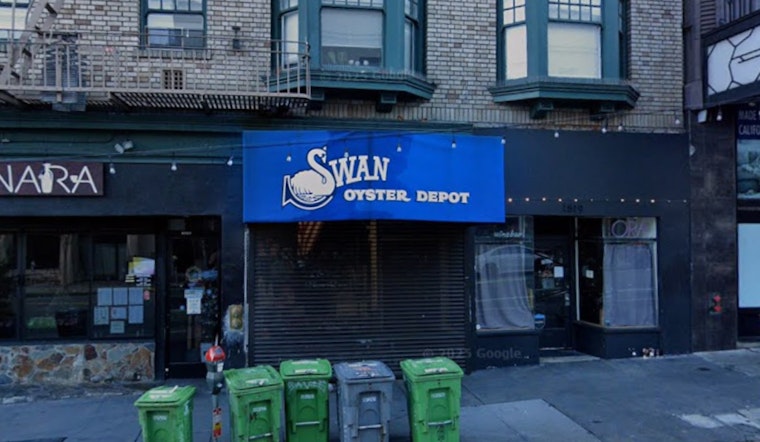
The century-old building housing Swan Oyster Depot, one of San Francisco's most iconic seafood institutions, has changed hands for just under $8 million in a deal that has sent ripples through the local real estate community and raised questions about the future of the beloved Polk Street landmark.
The property at 1517 Polk Street, which has been home to Swan Oyster Depot since 1912, was purchased by what brokers describe as "a very experienced multifamily investor in SF." The sale marks a significant transition for the historic building, which also houses 29 apartments and four other retail units including Japanese restaurant Nara, Italian restaurant Ti Piacera Ristorante, and Ora wine bar.
Tenants Expected to Stay Put
Clinton Textor and Angelo Baglieri of Marcus & Millichap, who brokered the deal, have sought to reassure the community about the future of the building's long-term tenants. "I expect the new owner will do everything possible to keep the existing retail tenants in place, as they have been tenants here for decades," Textor told SFGate. He noted that most retail tenants have multiple years remaining on their leases, which should provide some stability in the coming months.
For Swan Oyster Depot co-owner Kevin Sancimino, whose family has operated the tiny 18-stool seafood counter since 1946, the sale represents another chapter in the restaurant's storied history. "We don't foresee any problems," Sancimino told The San Francisco Standard. "But if something happens and we need to make a change, we will adapt." The Sancimino family purchased the business from its original Danish founders, the Lausten family, nearly 80 years ago and has maintained its old-school charm—including the original 18 wooden stools and marble counter from 1912—ever since.
A Building With History and Deferred Maintenance
According to Textor, the building will require substantial maintenance work due to its age. The property was sold by the estate of the late John Jenkel, and despite concerns about deferred maintenance, the brokers fielded multiple offers from across the country, according to The San Francisco Standard. Ultimately, the seller chose a local buyer "with an excellent track record and the specific competence required to return this building to" proper condition.
Baglieri emphasized the building's historical significance as a major selling point. "The building has so much history, and it was an incredible transaction to complete," he said in a statement, as reported by The San Francisco Standard. The presence of Swan Oyster Depot—with its notable visitors over the years including Anthony Bourdain and Francis Ford Coppola—reportedly helped attract prospective buyers despite the maintenance concerns.
Recent Controversies Cast a Shadow
The building sale comes during a turbulent period for Swan Oyster Depot, which faced public backlash this past summer over a Trump-themed hat displayed in the restaurant. The controversy erupted in July 2025 when food influencer Kat Ensign posted an image on social media showing a baseball cap featuring the numbers "45" and "47"—references to Donald Trump's two presidential terms—behind the counter.
The post sparked an immediate online firestorm, leading to review-bombing on Yelp and heated debates about politics in hospitality spaces. Kevin Sancimino defended the display, according to SFGate, explaining that the hat was a customer gift and was displayed among other memorabilia including a copy of "Hillary Rodham Clinton: Her Essential Wisdom." "People can have their different political views, and we can all coexist in the same space," Sancimino said at the time. The hat had reportedly been removed from display weeks before Ensign's post went viral.
This wasn't the first time Swan Oyster Depot faced controversy. In 2021, the restaurant was accused of racism when a staff member allegedly used the term "dim sum" in reference to a Vietnamese customer, according to SFist. The family explained at the time that this was internal shorthand for customers who ordered from multiple servers, but the incident led to negative reviews and social media backlash.
San Francisco Real Estate Context
The $8 million sale reflects broader trends in San Francisco's commercial real estate market, which has been showing signs of recovery after pandemic-era challenges. According to The San Francisco Examiner, office sales in the city could top $1 billion in 2025, with approximately 30 buildings currently under contract or being marketed. The reset in prices has created opportunities for new landlords to invest in improvements while potentially lowering rents to spur leasing activity.
For mixed-use properties like the Swan Oyster Depot building, which combines residential and commercial space, the market presents unique opportunities. Properties in walkable neighborhoods like Polk Street, with established commercial tenants and proximity to Nob Hill and Russian Hill, remain attractive to experienced investors despite maintenance requirements.
A Legacy Worth Preserving
Swan Oyster Depot opened at its current Polk Street location in 1912, following the 1906 earthquake that destroyed its original storefront. The restaurant has operated continuously ever since, making it one of the longest-running businesses in the United States. It won the James Beard Award for Best Restaurant in the American Classics category in 2000 and has been a semi-finalist for the award multiple times since.
The restaurant's appeal lies not just in its pristine seafood—including Dungeness crab, oysters on the half shell, and Boston clam chowder—but in its steadfast refusal to modernize. It remains cash-only, has no website, takes no reservations, and opens from 8 a.m. to 2:30 p.m., typically generating lines down the sidewalk throughout operating hours. Late chef and television host Anthony Bourdain famously called it his "happy zone" and visited regularly whenever he was in San Francisco.
As the building enters this new chapter of ownership, the community watches closely to see whether the new investor will maintain the careful balance that has allowed Swan Oyster Depot and its fellow tenants to thrive for so long. For now, the Sancimino family remains cautiously optimistic, prepared to adapt as they have done for nearly eight decades.
This article is being published on October 25, 2025, approximately four days after news of the sale first broke. The timing reflects both the significance of the transaction for this historic San Francisco institution and the ongoing interest in the future of the city's legacy businesses amid changing ownership and real estate dynamics.





