

























































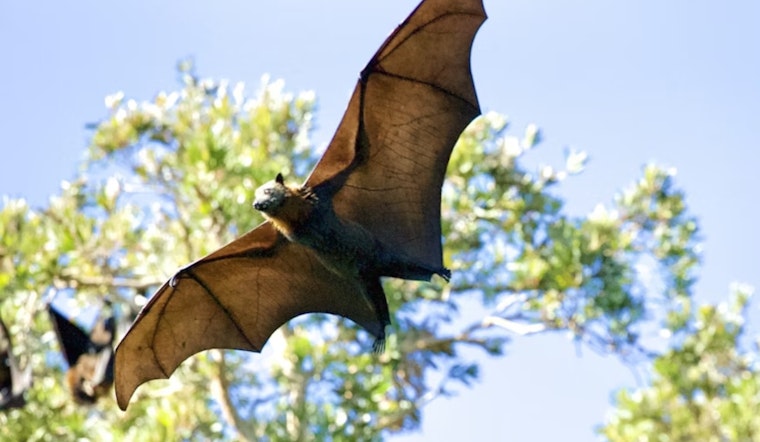
Just two weeks from now, Cincinnati's bat enthusiasts and curious families will gather at Maple Ridge Lodge to celebrate creatures that are often more feared than appreciated. The 2025 Ohio Bat Fest—coming to Mt. Airy Forest on October 25—promises to change minds about these misunderstood mammals, one interactive exhibit at a time.
University of Cincinnati researchers Joe Johnson and postdoctoral fellow Missy Meierhofer are leading the charge, bringing their expertise in information technology and wildlife conservation to create a free public event that's equal parts education and entertainment. The festival, running from noon to 5 p.m., marks a significant milestone: after years of being hosted by Ohio State's Carter Lab in Columbus, according to Carter Lab, the event has officially relocated to Cincinnati, fulfilling organizers' 2024 hopes to bring the celebration south.
Where Technology Meets Conservation
Johnson, a faculty member in UC's School of Information Technology, isn't your typical wildlife researcher—he's pioneered the integration of cutting-edge tech with field ecology. His work spans multiple federal and state-funded projects, from monitoring Virginia big-eared bats (one of North America's rarest species) to developing cloud-based modeling systems for bat and bridge conservation, according to UC Research Directory.
"I want to reach as many people as possible, to get them excited not just about bats, but about science," Johnson told UC News. "This festival is a chance to see how technology and conservation come together." His team has developed systems that allow communities to safely observe bats in real time, using everything from drone-mounted tracking equipment to sophisticated telemetry arrays.
Hands-On Science for All Ages
The festival's interactive approach sets it apart from typical educational events. Children can crawl through a kid-sized cave to discover hidden bat figures, craft flapping paper bats, and color their own species, reported UC News. Meanwhile, adults can test their tracking skills with a telemetry scavenger hunt using the same equipment researchers deploy in the field—though Meierhofer was quick to clarify that they'll be tracking a signal-emitting device, not actual bats.
Meierhofer, who brings international experience from her previous work as an Academy of Finland Postdoctoral Researcher studying viral pathogens in European bats, according to her professional website, is particularly excited about the educational impact. According to UC News, she emphasized that the festival aims to spark curiosity: "We've even built a kid-sized cave—children can crawl through and discover little bats we've created inside."
A Community Effort
Part of the nationwide Bat Week celebration that leads up to Halloween, the event brings together an impressive coalition of partners. The Ohio Department of Wildlife, Great Parks of Hamilton County, local wildlife rehabilitators (one bringing a live bat for demonstrations), and the Ohio Bat Working Group will all host booths, as reported by UC News. The Greater Cincinnati Grotto will share insights into caving, while local nonprofit Indigo Hippo is donating materials for children's crafts.
The festival also includes a silent auction featuring unique items like a Wildlife Acoustics Echo Meter Touch and a Charley Harper lithograph titled "Bat, Bullfrog, and Bonfire," with proceeds supporting bat conservation and education programs, according to Bat Week.
Why This Matters Now
The timing of this celebration couldn't be more critical. Ohio's bat populations face existential threats from white-nose syndrome, a fungal disease that has decimated populations since arriving in North America around 2006. The little brown bat, once Ohio's most common species, is now endangered in the state, according to Great Parks of Hamilton County.
Johnson's research portfolio reflects this urgency—he's currently leading a U.S. Fish and Wildlife Service-funded study evaluating the effectiveness of hibernacula manipulations for reducing white-nose syndrome effects, according to UC Research Directory. Some bat species have declined by more than 90% within five years of the disease reaching a site, as reported by the National Park Service. Researchers are testing innovative treatments, from cooling mine temperatures to slow fungal growth to using UV-C light and volatile organic compounds from orange peels and Bolivian wild pineapple.
Replacing Fear with Fascination
"Bats are often misunderstood," Meierhofer told UC News. "But when people see them up close and learn how vital they are to our ecosystems, their perception changes. That's what this festival is about—replacing fear with fascination." The ecological services bats provide are staggering—they save U.S. farmers an estimated $3 billion annually in pest control, according to Cincinnati Museum Center, with a single bat capable of eating up to 1,000 mosquitoes in an hour.
Johnson's research has revealed surprising discoveries, including tracking little brown bats to a previously unknown summer roost at Clendening Marina in Freeport, about 10 miles from their winter hibernation sites. "One of the fun things about life is that you can have scientists going to great lengths to find something and the folks who live there are like 'Yeh, if you had called me, I could have told you we had bats,'" Johnson told UC News in 2022.
Beyond their mosquito-munching prowess, bats are pollinators, seed dispersers, and ecosystem health indicators. Some species can live 30 years or more, hibernate, migrate, and continue to surprise researchers with their adaptations, according to UC News.
"We want people to walk away thinking, 'Wow, bats are incredible and worth protecting,'" Johnson said.
Event Details:
Ohio Bat Fest 2025
Saturday, October 25, noon–5 p.m.
Maple Ridge Lodge, Mt. Airy Forest
3990 Maple Ridge Rd, Cincinnati, OH
Free admission, all ages welcome
UPDATE: A previous version of this article misstated the date of the event.





