

























































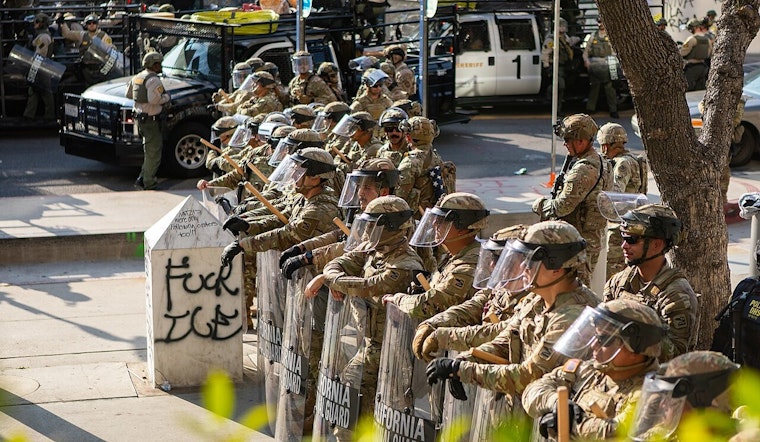
In a move spanning the gamut of federal power, a recent directive by the Trump administration sought to deploy National Guard forces from California and Texas into Oregon despite a federal court's previous order barring such an action. The response by Oregon officials was swift, with a broader order from Federal Judge Karin Immergut coming through on Sunday night to prevent any National Guard members from being sent for federal service in the state, according to official statements.
The administration's attempt to circumvent the initial court loss by sourcing troops from neighboring states might be seen as strategic, but Oregon leaders were united in their opposition; Senate Majority Leader Kayse Jama particularly vocal about the overreach, "The Trump administration lost in court Saturday, so they grasped for new ways to bully Oregon," his statement showing both concern for the aggressive posture taken by the federal government and pride in the quick-footed responses from Oregon's Governor Kotek and Attorney General Rayfield, a sentiment echoed among state officials, as mentioned on the Oregon Legislature website.
Accusations of President Trump using federal forces as a means to quell peaceful protests and score political points were at the forefront of Jama's concerns; he described such measures as a misuse of power that is not indicative of a valid public safety approach but rather a show of force and violence that has no place in Oregon's politics. According to the Oregon Legislature website, he stressed the vibrancy and security of Portland, contrasting it with war-torn regions he knew well as a former refugee, and stated, "Troops in our streets are a threat to our fundamental freedom to live and work peacefully," emphasizing the gravity of the situation and the determination of state leaders to push back against federal intrusion.
Rallying behind the rule of law appears to be Oregon's strategy moving forward amid the struggle between state sovereignty and federal assertions of authority, with Jama championing the fortitude of local governance in the face of presidential pressure; the majority leader's statement binds a narrative of resistance and accountability, reflecting a broader dialogue on the tension between local autonomy and centralized power, a discourse that surely will continue to unfurl as these events progress and the nation watches.





