

























































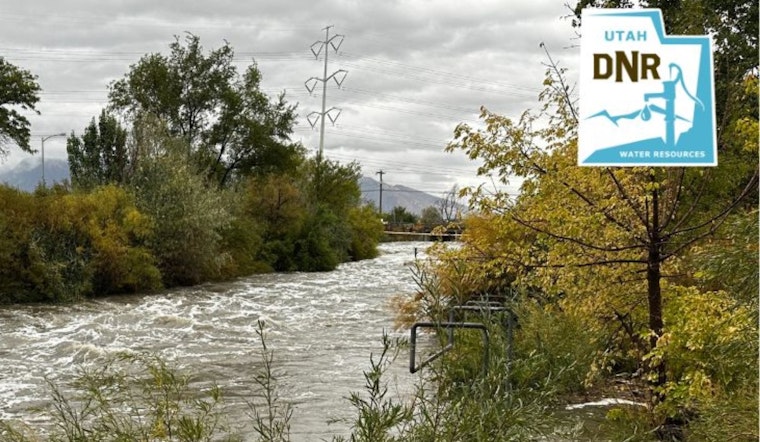
In an unexpected turn for Utah, the opening of the Water Year has brought with it an unprecedented level of early-season precipitation, marking a significant improvement in the state’s water conditions. As reported by the Utah Division of Water Resources, Salt Lake City has seen a record-breaking 4.95 inches of rainfall this October, the highest in over a century and a half of weather records at the Salt Lake City Airport. This influx of moisture stands as a groundbreaking first act in the water year, setting a positive outlook for the region's water supply.
Amidst this deluge, the director at the Utah Division of Water Resources, Candice Hasenyager, noted the essential nature of the rainfall to the state's water reserves. "Yes, we can all collectively say ‘we needed this’ as we think about the recent storms and our water supply," Hasenyager told Utah Division of Water Resources. Although welcomed, these early rains are just the first steps on a longer journey. According to experts, a significant portion of Utah's annual water supply depends on snowpack, which accounts for approximately 95% of it, highlighting the importance of the upcoming winter precipitation.
The Water Year, running from October 1 to September 30, is a carefully selected 12-month cycle allowing hydrologists to monitor and track the critical process that spans from autumn rainfall to winter snow and on to the spring thaw and runoff. This year's early moisture is not only setting rainfall records but is also boosting soil moisture levels by 10% higher than typical years, which promises a more effective spring runoff period. Typically, the dry ground saps the snowmelt before it can contribute to the reservoirs, but this year's saturation has prepared the soil, making it more conducive for water capture and conservation.





