

























































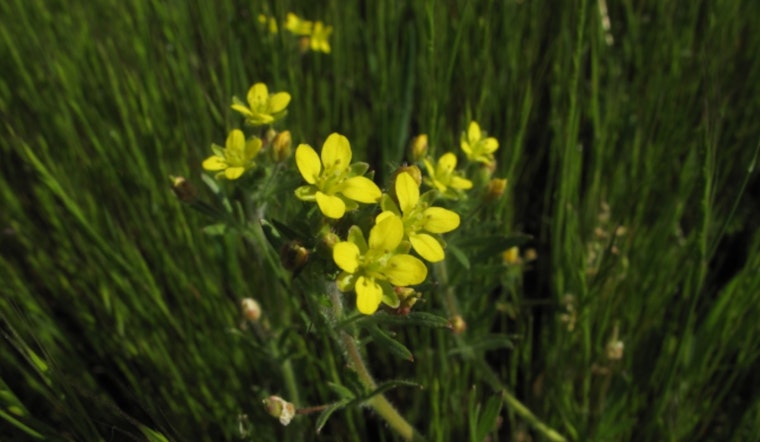
In a quiet corner of Vasco Hills Regional Preserve, a botanist's keen eye has hit the jackpot; a rare plant unseen for nearly seven decades has been unearthed from its low-profile existence. The caper-fruited tropidocarpum, last documented in 1957, apparently decided to show its leafy face, sparking a celebration among conservationists and botanists alike. The East Bay Regional Park District (EBRPD) and the East Contra Costa County Habitat Conservancy (Conservancy) are jointly dancing in the discoveries' glow, underscoring the synergy in their shared conservation efforts.
Working on behalf of the Conservancy, botanist Heath Bartosh, along with colleague Spencer Adams, rediscovered the plant on March 3. Surprising the casual observer and the seasoned professional alike, who believed the plant to be more elusive than a free parking spot in downtown San Francisco, this rediscovery receives its due fanfare as it represents more than just a botanical victory. Heath Bartosh told the East Bay Regional Park District, “This find highlights how crucial public land conservation and stewardship are to native plants.”
The caper-fruited tropidocarpum, a native Californian green with a pedigree dating back to its first discovery in 1888 by botany professor Edward Lee Greene of UC Berkeley, enjoys a status of 1B.1, rare, threatened, or endangered in both California and elsewhere, courtesy of the California Native Plant Society. It underlines the plant's tightrope walk in the world's increasingly non-native and competitive flora landscape. Despite a history of straddling counties, these plants maintain intimacy with small, singular clusters now known principally in the East Bay.
Acknowledging the significance of their find, the Conservancy's Executive Director Abigail Fateman expressed the importance of sustained efforts resulting in such successes, "Finding and documenting this new population required a thoughtful survey approach and persistence because annual plants may not germinate every year." As per EBRPD, Fateman emphasized the high priority now placed on the newly discovered population for ongoing monitoring and management.



