

























































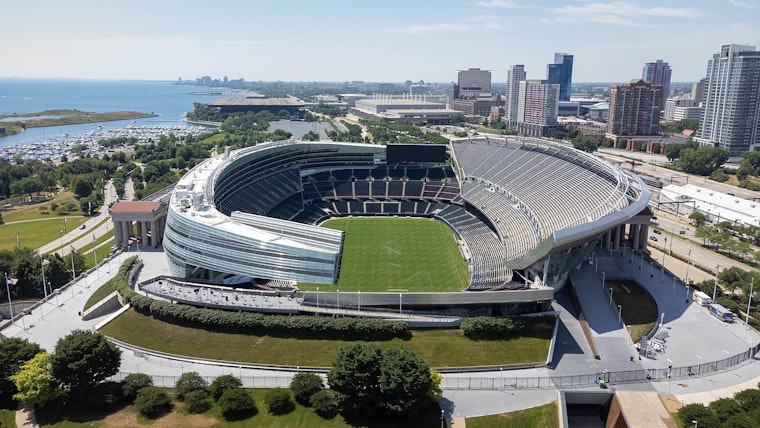
The Chicago Architecture Center is trying to rewrite Chicago's stadium script, urging City Hall to treat new arenas as engines for neighborhood growth instead of isolated sports fortresses. In a self-funded, 68-page playbook called Win/Win: The New Game Plan for Urban Stadiums, the group lays out a "Chicago Model" that links team wish lists to long-term transit, housing, and public space upgrades. The timing is no accident: multiple teams are chasing new venues while the city wrestles with old stadium debt and tricky financing questions.
According to the Chicago Architecture Center, a working group of civic leaders, architects, and team representatives spent three months sketching out site-by-site concepts for Soldier Field, Guaranteed Rate Field, and the United Center campus. The study suggests turning the Illinois Sports Facilities Authority into a broader redevelopment body that would lead negotiations and long-term oversight so that stadium deals deliver measurable neighborhood benefits. The authors argue that public support should be sized and structured to pay for lasting transit and housing improvements, not just juiced-up game-day traffic.
Eleanor Gorski, the CAC's president and CEO and a veteran of the city's Department of Planning and Development, led the effort and said the group tried to "look broader across different political spectrums," as reported by Sports Business Journal. The working group interviewed owners and executives from the Stars, Blackhawks, Sky, Cubs, and the United Center, and pulled in architects and development executives to round out the roster. Sports Business Journal described the finished product as aspirational and noted that some teams felt their viewpoints did not always come through on the page.
The report also lands in the shadow of old decisions that are still very much on the books. Bonds that financed Soldier Field's early-2000s renovation have ballooning payments and are not set to be retired until 2032, which complicates any attempt to tap the same hotel-tax revenue for fresh stadium borrowing. The Chicago Sun-Times has chronicled the rising costs and the central role of the Illinois Sports Facilities Authority in carrying much of that bond load. That setup, experts caution, squeezes the city's near-term budget options and raises the stakes for whatever stadium deals come next.
How the CAC wants deals to change
The working group argues it is time to ditch one-off stadium deals in favor of coordinated, long-range planning that locks team projects to broader transit and housing strategies, as outlined in the Chicago Architecture Center. The report sets out six core principles of the "Chicago Model" and includes sketches that turn oceans of surface parking into mixed-use blocks meant to keep neighborhoods active all year instead of only on game nights. It also floats the idea that a strengthened ISFA or similar redevelopment authority could bring all the players to the table, set performance benchmarks and keep institutional knowledge intact across election cycles.
Can it move policy?
For now, the document is more playbook than law. It will need serious political backing to turn its ideas into binding rules and not just a glossy guide. "We'll see how it has legs," Gorski told Sports Business Journal, noting that the CAC is already hearing from downstate legislators and community groups looking for advice. City officials have generally welcomed the concepts, but turning them into hard policy would require new legislation or a revamped agency with the authority and lifespan to outlast any single mayoral term.
Meanwhile, the clock is ticking. As local coverage has made clear, the Bears, White Sox, Fire, Bulls and Blackhawks are all at different stages on leases, financing plans or long-range site visions, which means the next 18 months could reshape major chunks of the lakefront and the blocks around the United Center. WBEZ and other outlets have detailed the competing proposals and complicated funding schemes that make lining up multiple stadium projects at once a high-wire act. The CAC report effectively offers a menu of alternatives, from infill housing to transit upgrades, aimed at leaving neighborhoods better off instead of stuck with maintenance bills and lingering debt long after the final whistle.





