

























































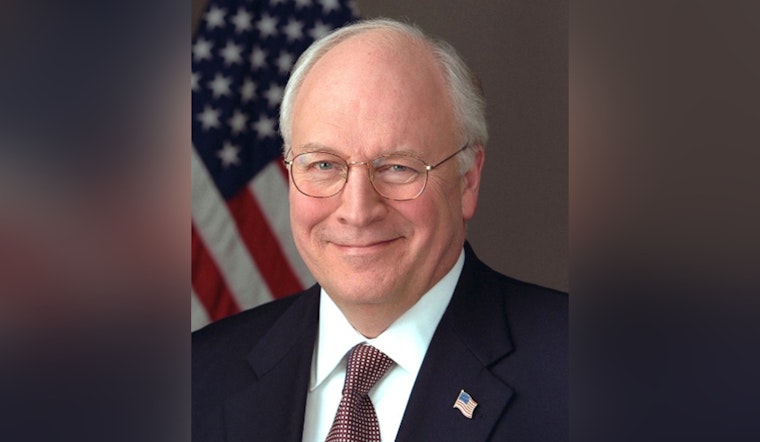
Dick Cheney, the vice president under George W. Bush, has died at 84. His family said he passed on Monday night with his wife Lynne and daughters by his side. They said he died from complications of pneumonia and heart and vascular disease, according to Reuters.
From Wyoming To The West Wing
Cheney served as the 46th vice president from 2001 to 2009 and before that built a résumé that included White House chief of staff, secretary of defense and Wyoming’s lone member of Congress. He also led Halliburton in the private sector and returned to public life as a dominant force in the Bush White House, where he consolidated influence across national security and energy policy.
Architect Of The Iraq War And Expanded Executive Power
He was a principal advocate for the 2003 invasion of Iraq and pushed to expand presidential authority in the years after the September 11, 2001 attacks. Cheney defended aggressive interrogation techniques and other security measures that critics labeled unlawful, and those policies continue to shape debates about the balance between security and civil liberties.
Tributes From Presidents And Political Capitals
Former President George W. Bush praised Cheney as a "decent, honorable man" and called his death "a loss to the nation," per the George W. Bush Presidential Center, as reported by The Washington Post. Leaders and commentators from across the country offered condolences while also revisiting the controversies of his tenure.
Break With Party In Later Years
In his later years, Cheney publicly broke with Donald Trump and supported his daughter Liz Cheney’s criticism of the former president. He also said he planned to vote for Democrat Kamala Harris in 2024.
Long Battle With Heart Disease
Cheney battled heart disease for decades, surviving multiple heart attacks and receiving a heart transplant in 2012. He later said the transplant left him “with a smile on my face, thankful for the gift of another day,” as mentioned by Associated Press. His family’s statement and contemporary accounts document years of medical struggles alongside a lifetime of public service.
How History Might Remember Him
Analysts say Cheney will be remembered as a consequential but polarizing figure who expanded executive power and reshaped U.S. foreign policy after 9/11, as per The Guardian. His death is likely to reopen debates about the Iraq War, executive authority and the long-term costs of the security choices he championed.





