

























































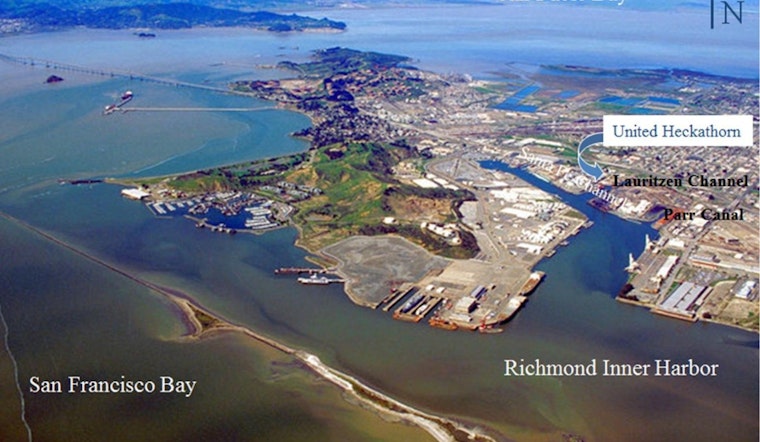
After months of public meetings, Richmond residents and environmental groups have taken matters into their own hands. A community coalition has drafted and submitted a cleanup plan for the United Heckathorn Superfund site in Richmond Harbor, which would involve draining the Lauritzen Channel and hauling out contaminated soil, sediment, rocks, and industrial debris. Their pitch: skip underwater dredging, which they argue risks stirring up decades-old DDT and other pesticides.
Who filed the plan
The proposal, which comes from the Richmond Shoreline Alliance, was developed in collaboration with the Sierra Club Bay Chapter and San Francisco Baykeeper and was formally submitted to the EPA more than two months ago, organizers said. In a statement to Richmondside, the EPA said it’s reviewing the plan, hasn’t selected a recommended cleanup strategy for the marine sediment area, and now aims to release a proposed plan in the first half of next year.
How the 1990s remedy fell short
Back in the 1990s, the EPA dredged the Lauritzen Channel and capped contaminated upland soils with concrete, moves that removed a lot of material but didn’t eliminate DDT and dieldrin from marine sediments. Agency materials outline that the history and current process require a remedial investigation and feasibility study before a Proposed Plan is put out for public comment. For the timeline and technical steps, see the U.S. EPA.
What the community plan would do
The coalition’s preferred fix is a “dry” removal: temporarily draining the channel, then excavating the contaminated soil and sediment so it doesn’t get re-entered into the water column. Organizers say the community-developed plan was shaped with input from engineers, environmental scientists, and former government staff, citing EPA data that shows sediment levels in parts of the Lauritzen Channel are far above remediation goals, reportedly as much as 3,800 times higher in some spots. Read the group’s summary at Richmond Shoreline Alliance.
Disposal and community health concerns
Last Thursday, at a community meeting, residents pressed not just on immediate health risks but also on where the mess would go after it was dug up. Local reporting and longtime neighbors recall that the 1990s dredged material ended up in an Arizona desert landfill, fueling fears that Richmond’s toxic legacy could be exported to another community again. Those anxieties persist alongside a current “Do Not Eat” advisory for fish caught in parts of the channel.
Liability and the Superfund process
United Heckathorn has been on the federal Superfund National Priorities List since 1990, encompassing approximately five acres of upland areas and roughly 15 acres of marine sediments in the Lauritzen and Parr channels. City and federal records identify multiple potentially responsible parties associated with mid-20th-century operations, although some companies no longer exist, which complicates cost recovery and timelines. That legal tangle is part of why EPA’s planning involves detailed studies and extended public comment periods; see the City of Richmond for background.
What happens next
The EPA states that it’s still evaluating alternatives and anticipates releasing a Proposed Plan for public feedback in the first half of next year. The agency has also scheduled a final community meeting in this series for Jan. 28, 2026, at 6:30 PM via Zoom. In the meantime, organizers say they’ll continue to push for transparency, a clear disposal strategy, and a cleanup that doesn’t shift Richmond’s toxic burden onto someone else’s doorstep.




