

























































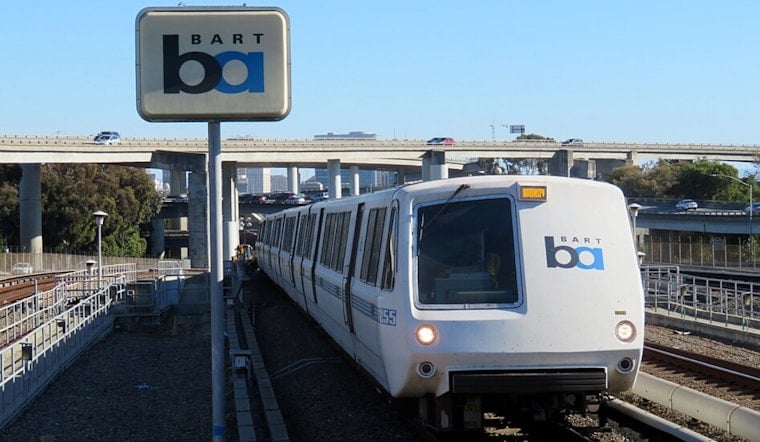
BART General Manager Bob Powers is set to lead a free walking tour spanning three of the transit system's most architecturally and historically distinct stations — Powell Street, Glen Park, and San Bruno — with special guest speakers joining along the way to discuss station history, design, engineering, and recent upgrades. The tour, scheduled for August 20, is expected to last nearly three hours and requires Eventbrite registration, with limited space available.
According to a post from BART, the tour will spotlight fresh station upgrades while tracing how each stop reflects a different chapter of the transit agency's more than 50-year history. Powell Street is described as an anchor of a major transit and tourist hub, Glen Park as a historic landmark tucked into a residential neighborhood, and San Bruno as a connector between a growing business district and an international airport. Powers, a licensed professional engineer who previously served as BART's deputy general manager before his unanimous appointment as General Manager in July 2019, regularly conducts these kinds of station walking and listening tours to engage directly with commuters, according to background on his executive role.
The three stations have distinct features and histories:
— BART (@SFBART) August 6, 2026
📍Powell St anchors a major transit and tourist hub.
📍Glen Park is a historic landmark tucked into a residential neighborhood.
📍San Bruno connects a burgeoning business district to an international airport
Powell Street's Downtown Transformation
Powell Street Station opened for BART service in November 1973 and was designed by the prominent architectural firm Skidmore, Owings & Merrill as a three-level transit hub beneath Market Street, according to Wikipedia. The station serves four BART lines and six Muni Metro lines below Hallidie Plaza, making it one of the system's busiest downtown anchors.
BART completed a multi-million-dollar modernization of the station in late 2022 that added energy-efficient LED lighting, renovated public concourse restrooms, glass fare barriers, and an illuminated ceiling art installation titled Elysium by artist Stephen Galloway, per BART. That project also relocated Clipper vending machines and fare gates to widen pedestrian flow through the busy concourse. Separately, San Francisco Public Works launched a $9 million accessibility project at Hallidie Plaza — the street-level entrance above the station — to build ADA-compliant ramps connecting Market Street, the plaza level, and the station concourse, a plaza originally designed in 1973 by Lawrence Halprin, John Carl Warnecke, and Mario Ciampi.
The upgrades fit into a broader system-wide push: BART's Market Street canopy and escalator rebuild initiative has systematically replaced original 1970s escalators and installed protective entrance canopies across downtown San Francisco stations, including Powell Street, to improve equipment reliability and security, according to BART. Hoodline previously reported on new escalators along Market Street. Much of this modernization traces back to Measure RR, the $3.5 billion infrastructure bond approved by Bay Area voters in 2016 that has funded station overhauls, canopy installations, and track upgrades across three counties, per BART.
Glen Park's Brutalist Landmark Status
Glen Park Station, designed by Bay Area architect Ernest Born in collaboration with Corlett & Spackman, opened in 1973 and features skylights, rough concrete arches, Carrara marble platform flooring, and a custom abstract marble mural, according to Docomomo US. Born also created BART's original logo and graphic signage system in the late 1960s. The station's design has drawn recognition well beyond the neighborhood it serves.
In 2019, Glen Park Station was officially listed on the National Register of Historic Places, cited as a standout example of Brutalist architecture, according to the National Park Service. Local preservation groups and San Francisco Heritage nominated the station to ensure future maintenance respects its original design. Hoodline has also reported that Glen Park riders recently saw a daily parking rate increase amid a Bay Area parking rate spike.
San Bruno's Role In A Changing Peninsula
San Bruno Station opened on June 22, 2003, as part of a $1.5 billion, 14-mile BART extension to San Francisco International Airport designed and constructed by engineering firm HNTB Corporation, according to BART. It was one of BART's first major design-build turnkey extensions, linking the Peninsula directly to the airport.
The station's surrounding area is now on the cusp of significant change. The 44-acre site of The Shops at Tanforan, adjacent to San Bruno BART Station, is slated for a major transit-oriented redevelopment project expected to add up to 2 million square feet of life-science space and at least 1,000 housing units. Longtime retail tenants like Barnes & Noble closed in 2026 ahead of the site's transformation, a closure Hoodline covered in Tanforan's final bookstore chapter. The changes come as BART continues working to stabilize service on that line, following a mystery track issue that disrupted trains between San Bruno and South San Francisco earlier this summer.
Registration for the August 20 walking tour is open through Eventbrite, with organizers noting that space is limited. Powers previously oversaw major transit capital projects in Seattle and Baltimore before joining BART in 2012, and he has used similar station tours in the past to connect directly with riders about system upgrades and connectivity initiatives.




