

























































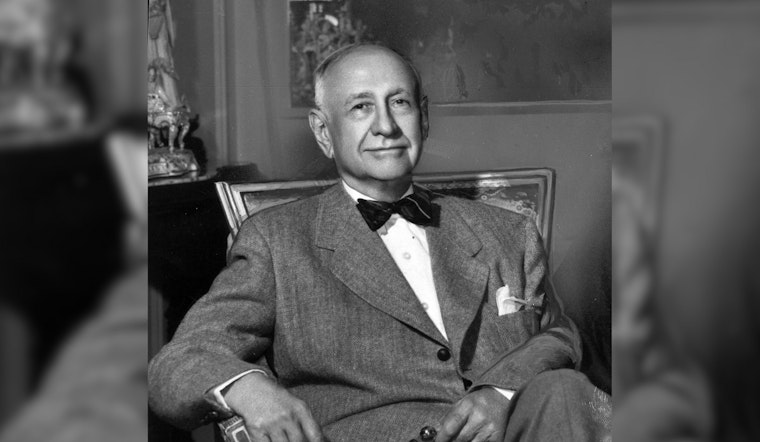
Fort Worth has long been a hub of Western culture and commerce, thanks in no small part to Amon G. Carter, a name that resonates through the city’s landmarks and history. Not originally from the locale, Carter became synonymous with Fort Worth, famously sparring with its neighbor Dallas by saying, “Fort Worth is where the West begins ... and Dallas is where the East peters out,” as reported by the City of Fort Worth.
Having quit school at age 11 to support his family, Carter's bootstraps story is well-documented. His journey took him from a series of odd jobs to becoming a pivotal player in Fort Worth’s media landscape, where he would aggressively and unapologetically promote the interests of the city. After cutting his teeth in newspaper advertising, Carter managed to quickly raise funds and merge the Fort Worth Star with its competitor in 1909, creating the Fort Worth Star-Telegram, and he didn't just stop there.
Beyond the world of print, Carter's ventures included founding Fort Worth's first licensed radio station, WBAP-AM, in 1922 and its first commercial TV station, WBAP-TV/NBC Channel 5, in 1948. His advocacy played a vital role in the arrival of American Airlines to Fort Worth, the development of Meacham Field, and the securing of government funding for an aircraft factory now known as Lockheed Martin, per the City of Fort Worth.
But it wasn't only the aviation and media industries Carter bolstered; his philanthropic efforts continue to resonate, notably through the Amon Carter Museum of American Art, a Fort Worth treasure housing some of the most significant collections of American artwork. Established after he died in 1955, Carter's legacy foundation also funds education, arts, and civic projects in Texas.
His name lives on well beyond the printed page or broadcast signals – it is practically emblazoned across the city. From the Amon G. Carter Stadium at TCU to the historic Amon Carter Field, now part of the Dallas/Fort Worth International Airport area, his influence is indelible. City parks, schools, and boulevards all bear his mark, each testament to the profound impact Carter had on shaping Fort Worth's distinct identity. As Carter himself once put it, "You can't keep taking presents off the tree unless you put some on." This speaks volumes to his approach to civic engagement, as highlighted by the City of Fort Worth.





