

























































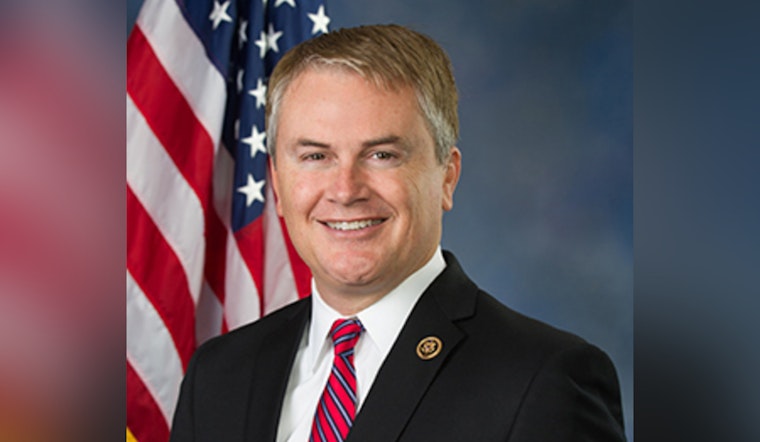
In a push for increased government transparency and accountability, House Committee on Oversight and Government Reform Chairman James Comer (R-Ky.) has put forward a suite of legislative reforms set for review this coming Tuesday, aimed at fine-tuning the inner workings of federal agencies and the federal workforce, according to an announcement by the Chairman himself.
Under Chairman Comer's eye, the focus is as much on efficiency as it is on oversight; the scheduled markup will consider bills such as the Equal Representation Act, which introduces a citizenship question to the census taking place for 2030 and beyond, and excludes noncitizens from the apportionment base, while the EQUALS Act of 2025 establishes extended probationary periods for newly appointed federal employees, during which time they must prove their worth or face termination, Comer's statement delivered a commitment to aligning with President Trump’s broader government reform efforts, ensuring "that Americans’ voices are not diluted and that they can be employed in the federal workforce without undue burdens and other hinderances," he said on the House Oversight Committee.
Other key proposals up for discussion include the Official Time Reporting Act, which enforces an annual report detailing government-funded "official time" usage, and the Skills-Based Federal Contracting Act, promoting skill over education or experience in federal contract solicitations, with a focus on justifiably necessary requirements, per the House Oversight Committee briefing. The Federal Relocation Payment Improvement Act suggests a shift to lump-sum payments for employee relocations, a potential move towards streamlining financial transactions and cutting through bureaucratic tape.
The Federal Supervisor Education Act of 2025 is crafted to bolster agency leadership through targeted training programs, addressing agency-specific needs such as mentorship and employee discipline, while the Information Quality Assurance Act (IQAA) takes aim at ensuring that agencies base rules and guidance on the "best, reasonably available" information and evidence, the House Oversight Committee firmly positions these bills as steps toward a leaner, more capable, and more transparent federal system capable of addressing and managing software assets with the SAMOSA Act, adding another layer to the comprehensive reform package.
Amidst this sweep of reform measures, the Expanding Whistleblower Protections for Contractors Act of 2025 and the Unauthorized Spending Accountability (USA) Act also make their way into the Committee's dossier, seeking to extend whistleblower protectors to federal contractors and phase out unauthorized programs respectively. The Committee's ambition reflects an agenda of principled oversight, structured efficiency, and a willingness to adapt and respond to the complexities of modern governance, as detailed in the Oversight Committee's release.





