

























































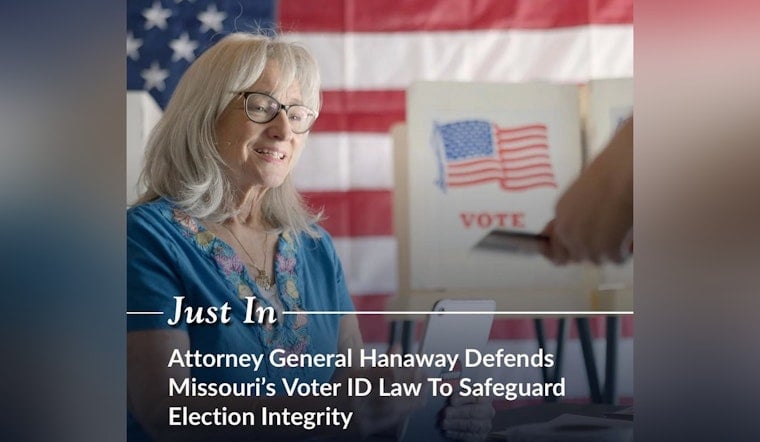
Missouri Attorney General Catherine Hanaway is doubling down on defending the state's voter ID law as it faces scrutiny from the Missouri Supreme Court. The case, centered on House Bill 1878, puts the requirement of government-issued photo ID for in-person voting under the judicial microscope. The law was enacted in 2022 and was pitched as a means to bolster the security of Missouri elections.
In a bid to fortify election integrity, Hanaway and her team contend that the voter ID law is a "commonsense safeguard." According to a statement from the Attorney General's Office, "Requiring government-issued photo identification is a commonsense safeguard that strengthens confidence in our elections and ensures every lawful vote is protected." HB 1878 also features stipulations, such as providing free IDs and supporting documents, ensuring that, the provision of accessibility measures keeps pace with the enforcement of ID requirements.
The Missouri Constitution is unequivocally cited by Hanaway's office as the legislative backbone giving credence to such regulations. Election officials who took the stand during proceedings reaffirmed the specter of voter impersonation, touting photo IDs as the most reliable countermeasure. These assertions hinge on the belief in photo ID's efficacy in stopping fraud preemptively, a perspective the Office staunchly defends.
Now, the Missouri Supreme Court is tasked with a decision that could set the precedent for election law in the state. Hanaway's office is pressing the court to uphold HB 1878, thereby reasserting the State's ability to implement measures it deems, necessary for preserving the sanctity of its elections. The eyes of Missouri are on the Supreme Court, as it deliberates over the balance between securing elections and maintaining voter accessibility.




