

























































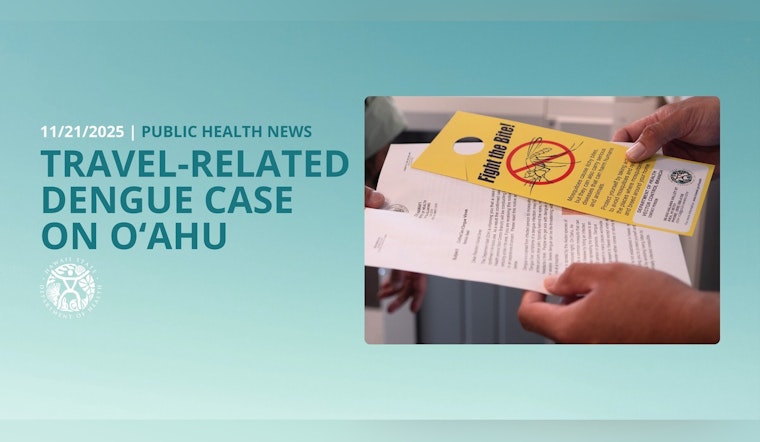
The Hawaiʻi Department of Health has confirmed another travel-related dengue virus infection on Oʻahu, nudging the statewide 2025 total up to 14 cases. Thirteen of those infections have been reported on Oʻahu and one on Maui. Health officials say the newest patient was exposed while traveling abroad and is not connected to the earlier infections. DOH teams have been sent into the affected neighborhood to run inspections and mosquito-control work in the surrounding area.
The department flagged the case in a brief update on its official X account Friday morning, shared by @HawaiiDOH on X.
DOH Deploys Inspections And Mosquito-Reduction Teams
In a newsroom release, the Hawaiʻi Department of Health confirmed that the latest case is travel-related and not linked to previous infections, and again put the statewide tally at 14 cases, with 13 on Oʻahu and one on Maui. The department said its Vector Control Branch is inspecting the surrounding area and carrying out mosquito-reduction activities to cut the chances of any onward spread. Officials reminded residents that mosquitoes need only small amounts of standing water to breed and urged households to clear common breeding spots in and around their homes.
Local outlets have been tracking the steady rise in travel-related infections this year, with Oʻahu dengue cases hit double digits in August and Hawaii News Now carrying the department's latest statement on Friday. Coverage so far has stressed that all identified infections remain travel-associated, while warning that the growing count raises the risk of local spread if infected travelers are bitten by local Aedes mosquitoes.
What Travelers And Clinicians Should Know
The Centers for Disease Control and Prevention advises people heading to dengue-endemic areas to use EPA-registered insect repellent, wear long sleeves and pants, and sleep in screened or air-conditioned rooms. Returning travelers are urged to be extra careful about avoiding mosquito bites for about three weeks after they get back, which helps lower the chance that a local mosquito picks up the virus.
Clinicians, along with anyone experiencing compatible symptoms such as fever, severe muscle or joint pain, rash, nausea, or vomiting, are advised to consider dengue testing and to contact the DOH Disease Reporting Line at 808-586-4586 for guidance, in line with state public-health protocols.
Residents can chip away at the risk by dumping standing water from buckets, planters, and other small containers, covering stored water, and checking water-catching plants like bromeliads. State and federal guidance remains focused on prevention and early detection, with officials noting that cases are still linked to travel rather than local transmission.





