

























































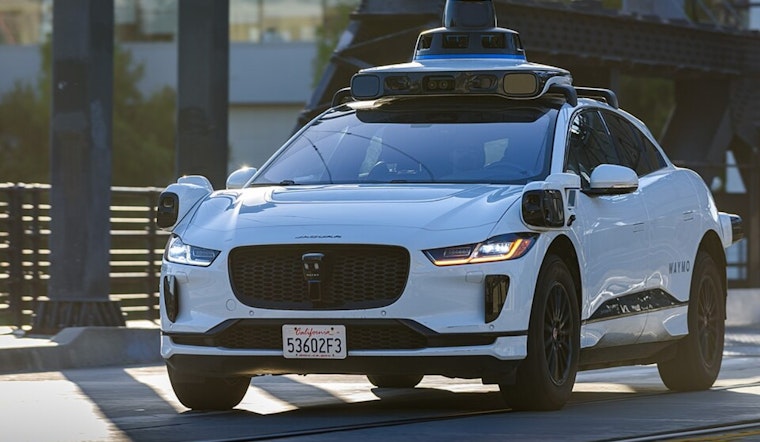
The open road just got a little more autonomous. In what marks a significant milestone for driverless technology, Waymo began offering freeway rides to select public riders in San Francisco, Los Angeles, and Phoenix today—becoming the first company in the United States to operate fully autonomous robotaxis on highways without any human backup driver, according to CNBC.
For Bay Area residents, the implications are particularly dramatic. The Mountain View-based company has expanded its service territory to create a unified 260-square-mile zone spanning from San Francisco all the way down to San Jose, as reported by The SF Standard. This freeway capability could reduce ride times by up to 50%—transforming what used to be a tedious 90-minute surface-street crawl from the city to South Bay into something far more palatable, according to TechCrunch.
From Testing Ground to Public Service
This launch didn't materialize overnight. Waymo spent more than a year testing its vehicles on freeways with employees and their guests riding along to ensure readiness for this moment, as reported by Axios. "Achieving fully autonomous freeway operations is a profound engineering feat—easy to conceive, yet hard to truly master," Waymo co-CEO Dmitri Dolgov explained to reporters, acknowledging the complexity of developing a system that operates without human oversight at highway speeds.
The expansion also brings 24/7 curbside service to San Jose Mineta International Airport, making it California's first international airport to offer commercial robotaxi service, according to U.S. News & World Report. This positions SJC as only the second airport nationally with such service, following Phoenix Sky Harbor.
The Rollout Strategy
Don't expect to immediately hop on Highway 101 in a Waymo, though. The service is initially available only to early-access users who've opted into new features through the Waymo app, as detailed by CNBC. The company plans to gradually extend freeway access to more riders over time, with users able to express interest in taking freeway trips directly in the app. When a freeway route proves "meaningfully faster" than surface streets, riders may be matched with a freeway trip.
The expanded Bay Area coverage now includes San Francisco, San Bruno, San Mateo, San Carlos, Redwood City, Palo Alto, Mountain View, and San Jose—operating on freeways including the 101, 280, and others, according to Bay Area News Group. Full access to this expanded territory will roll out over the next couple of weeks.
Safety Track Record Under Scrutiny
The freeway expansion comes against a complicated backdrop of safety concerns and incidents. In May 2024, federal traffic-safety authorities launched an investigation into Waymo after 22 reports that its robotaxis potentially violated traffic safety laws or engaged in "unexpected behavior," including 17 collisions, as reported by Bay Area News Group. The probe ended after Waymo made software updates.
More recently, local tensions flared when a Waymo vehicle struck and killed a beloved Mission District bodega cat named KitKat in early November, prompting Supervisor Jackie Fielder to call for legislation allowing voters to decide whether robotaxis can operate locally, according to KQED. In January, the first-ever fatal crash involving a fully driverless vehicle occurred when a human-driven SUV rear-ended multiple vehicles at high speed, creating a six-car pileup that killed one person—though Waymo was not at fault, as reported by Understanding AI.
Despite these incidents, data suggests a nuanced safety picture. Of 38 serious crashes between July 2024 and February 2025, only one was clearly Waymo's fault, with 34 appearing to be mostly or entirely caused by human drivers, according to Understanding AI. The company's own safety data shows that through December 2024, Waymo vehicles experienced injury-causing crashes less than one-third as often, per mile, as human-driven vehicles in Phoenix and San Francisco.
But not everyone's convinced the data tells the full story. Philip Koopman, a professor emeritus at Carnegie Mellon University who studies autonomous vehicle technology, told Bay Area News Group that while Waymo could credibly claim to be on track toward being safer than human drivers, the company hasn't accumulated enough miles to definitively prove it's less likely to cause fatalities. "All of the miles at low speeds don't necessarily predict what happens at high speeds," Koopman cautioned.
The Competition Heats Up
Waymo's freeway launch comes as the Bay Area robotaxi landscape grows increasingly crowded. As noted by The SF Standard, Tesla recently launched its own "robotaxi" service that includes some highway routes—though unlike Waymo, Tesla still requires a safety monitor in the driver's seat for those trips. Amazon-owned Zoox is also preparing to launch next year, while Uber has announced plans to introduce a robotaxi service as well.
The timing is strategic for another reason: Santa Clara County is preparing to host Super Bowl LX and FIFA World Cup matches at Levi's Stadium next year. San Jose Mayor Matt Mahan expressed hope that visitors to these major sporting events will travel across the Bay Area in robotaxis, according to The SF Standard.
Yet some local officials remain supportive of the expansion despite the concerns. San Mateo County Supervisor David Canepa, identified by Bay Area News Group as a "former Waymo foe but now a fan," said the robotaxis haven't caused problems in his county.
What's Next
Waymo's ambitions extend well beyond today's announcement. The company has stated plans to expand freeway capabilities to Austin, Atlanta, "and beyond" in the future. According to Electrek, Waymo also announced plans earlier this year to expand operations to Miami, San Diego, and Washington, D.C., in 2026, plus international expansion beginning in London.
For now, Bay Area residents eager to experience freeway robotaxi rides can sign up through the Waymo One app to join the waitlist for early access. Airport rides at San Jose will carry an additional $4 fee, with pickups available at Terminal A by the bus stop on Airport Boulevard and at Terminal B at the south curb of the rental car center, as detailed by Bay Area News Group.
Whether this marks the dawn of a safer, more efficient transportation future or simply moves the testing of unproven technology from city streets to even faster roadways remains to be seen. What's certain is that the autonomous revolution just shifted into high gear—literally.





