

























































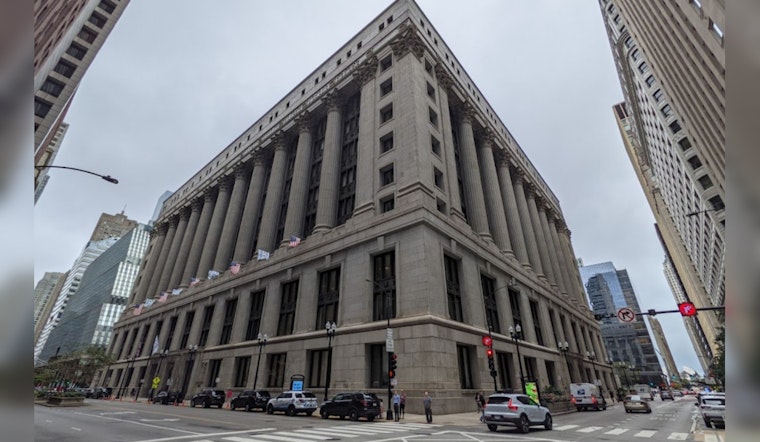
The Chicago City Council has delivered a sharp divergence from Mayor Brandon Johnson's financial strategy, moving to adopt an alternative budget that eliminates a contentious head tax on major corporations. The passed measure skirts the mayor's head tax, focusing instead on tax increases in other sectors and the controversial sale of unpaid city debt to private collectors, as reported by NBC Chicago.
During a notably contentious session that ended with a 30-18 vote, Mayor Johnson's plan to impose a tax on companies with over 500 employees was sidestepped by the Council. Sold to retrieve $89 million, the budget instead proposes to recoup revenue through escalating the bag, rideshare, and liquor sales taxes, and by legalizing video gaming in certain establishments. This move, which aims to mitigate the city's deficit without risking a potential credit downgrade, has garnered mixed responses among the aldermen. As quoted in an NBC Chicago interview, Ald. Sam Nugent pointed out that their priority was "to pass a budget that did not kill jobs at a time when the city faces its worst forecast since COVID."
The mayor's disapproval of the new budget is evident, particularly due to its exclusion of the corporate head tax, which he has defended as a fair demand for larger businesses to contribute equitably. In the wake of the City Council's decision, Mayor Johnson is left with a critical choice: to sign off on a plan he has deemed "morally bankrupt" or to wield his veto power and risk the first Chicago government shutdown in three decades. According to the Sun-Times, Johnson has described the alternative proposal as one that will not meet the assumed lofty revenue goals and has expressed his intentions of continuing to fight for more revenue from wealthier corporations.
Meanwhile, aldermen from across the political spectrum have expressed their stance, with some siding with the mayor and others backing the alternative budget. In a statement obtained by the Sun-Times, Ald. Byron Sigcho Lopez made an impassioned plea in favor of the mayor's head tax, which he labels as opposition to a "morally bankrupt" alternative. On the other hand, Ald. Anthony Beale has celebrated the passage of the new budget, which he supported, marking his first affirmative vote on a budget in six years and highlighting the unity in the opposition's movement.
The backdrop to this political rift harks back to a time referred to as the Council Wars, offering a historical echo as Ald. Pat Dowell, chair of the finance committee, and opposition aldermen took control of the budget process, an event unseen since the confrontational 1980s era of Mayor Harold Washington. Mayor Johnson now faces the decision on whether to enact a veto, as city law allows a cooling-off period of five days for appropriation bills. Should a veto occur, opposition aldermen are calculating their ability to amass a 34-member majority needed to override the mayor's decision. The city inevitably holds its breath as a potential veto-override vote is scheduled for December 29 as per the opposition's planning, said the Sun-Times.





