

























































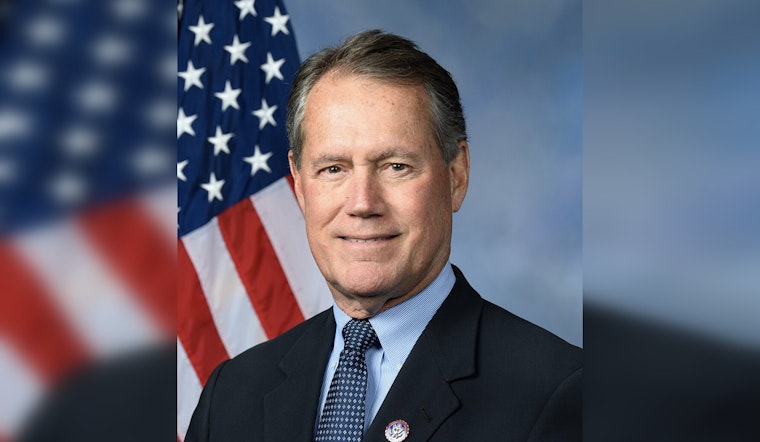
U.S. Rep. Ed Case has introduced federal legislation intended to strengthen economic ties between the United States and Pacific Island nations, with a focus on involving Hawaiʻi in the process.
The Promoting Regional Opportunities for Sustainable Prosperity and Economic Resilience in the Pacific Act, known as the PROSPER Act and introduced as H.R. 6619, would extend duty-free treatment for certain exports from Pacific Island countries, encourage the administration to pursue new trade agreements, and establish a trade facilitation and capacity-building program to help small island economies access U.S. markets. Case said the legislation is intended to provide a market-based alternative to foreign infrastructure loans while supporting employment in both the islands and Hawaiʻi.
In a press release from his office, Rep. Case, a founding co-chair of the Congressional Pacific Islands Caucus, described Pacific Island countries as important partners in maintaining a free and open Indo-Pacific. The release outlines H.R. 6619’s key provisions, including duty relief modeled on the Generalized System of Preferences (GSP) and a requirement for the president to submit a plan for free-trade negotiations with Pacific partners. The bill would extend duty-free treatment in the same way provided to least-developed beneficiary developing countries under the GSP and establish a trade facilitation program aimed at increasing exports and supporting job creation in the region.
Security Stakes And Strategic Timing
Supporters describe the measure as combining trade and security objectives, coming amid increasing competition for influence in the Pacific. The U.S.-China Economic and Security Review Commission has recommended enhanced economic support for Pacific Island partners to protect U.S. interests, while broader national security assessments identify the Indo-Pacific as a key economic and geopolitical region. Lawmakers supporting PROSPER say initiatives such as preferential market access offer a cost-effective way to complement U.S. defense and diplomatic efforts in the area.
GSP Lapse And What PROSPER Would Fix
A key focus of the legislation is the Generalized System of Preferences, a long-standing program that allowed thousands of products to enter the United States duty-free until it expired at the end of 2020. According to Congress.gov, the program lapsed on December 31, 2020, leaving many exporters without preferential access. PROSPER would reinstate duty-free treatment for eligible Pacific Island countries in the same manner previously applied to least-developed GSP beneficiaries.
Case and local coverage highlight several island products that could benefit if the preferences are restored, including tuna, cane sugar, ginger, and taro entering the U.S. market duty-free, according to reporting by Kauaʻi Now.
What Happens Next
The measure is now formally introduced in the House as H.R. 6619, meaning it will go through committee referrals, possible hearings, and potential amendments before any floor vote. Case’s office described the bill as a cost-effective way to offer an alternative to foreign infrastructure loans by focusing on economic partnership. Business groups, Pacific Island governments, and trade experts will monitor how eligibility is determined and whether Congress provides funding for the planned capacity-building programs.
Why Hawaiʻi Is Dialed In
Hawaiʻi’s location between the U.S. mainland and the Pacific Islands gives the legislation direct relevance for the state. For local seafood companies, farmers, and food processors, restored duty-free access for Pacific Island products could improve supply chains and create clearer routes to mainland buyers. Supporters note that stronger trade links may also reinforce cultural and family connections across the Pacific while providing local exporters with more predictable access to U.S. markets.
Critics note that small producers in the Pacific Islands may face challenges meeting U.S. regulatory and quality standards without substantial technical support. Reporting from Kauaʻi Now highlights that PROSPER is designed to combine duty-free access with trade facilitation and capacity-building programs. How these components are funded and implemented will likely influence whether the bill generates significant economic impact or remains primarily a legislative framework.





