

























































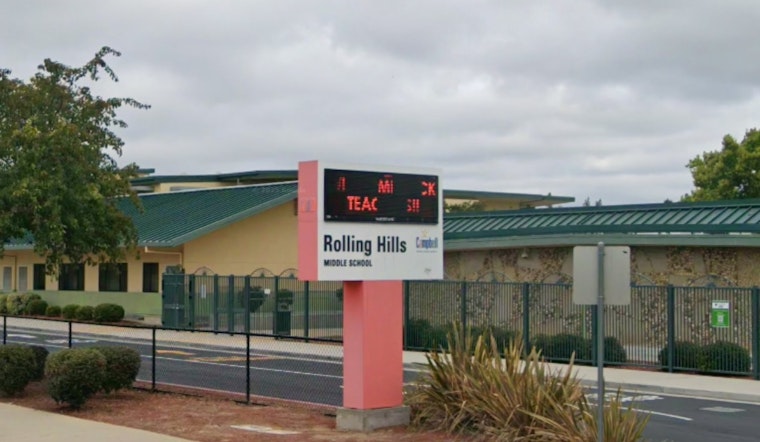
An email threatening to shoot staff and students at Rolling Hills Middle School in the Campbell area was logged by police last Saturday, with the incident labeled a threatened crime with intent to terrorize and noting that specific staff members and students were targeted.
The terse police-log entry, first noted by the East Bay Times, is dated Saturday and describes an email that singled out school personnel and students. The outlet reports that its brief summary is drawn directly from the log, not from a fuller investigative report, and offers no real detail about the sender, the content beyond the shooting threat, or a possible motive.
Rolling Hills Middle School is part of the Campbell Union School District and serves middle school students in the surrounding area, according to the California Department of Education directory. It is one of several district middle schools that draw students from Campbell and nearby neighborhoods.
The East Bay Times summary does not list any arrests, does not name a suspect and does not include a public statement from the district or police about follow-up steps. With only the police-log note to go on, basic questions remain unanswered, including who sent the email and whether authorities view the threat as credible.
What The Law Says
Under California law, prosecutors can charge criminal threats under Penal Code §422, but convictions hinge on several specific elements. They must show the person who made the statement intended it to be taken as a threat and that it caused a reasonable, sustained fear. Courts have unpacked those requirements in decisions interpreting the statute, and case law summaries collect that judicial analysis on sites such as FindLaw.
Why Threats Can Be Hard To Prosecute
Legal analysts and reporting have noted that email and mass-message threats can be tough cases for prosecutors, particularly when a threat does not clearly name a specific victim or lacks supporting evidence. Those hurdles have helped fuel debates in California about whether and how to close gaps in current law, and how to balance First Amendment protections with the need to deter threats against schools, as explored by CalMatters.
Precautions Families Should Expect
When a school district receives a threat, it will typically alert families through official channels and work with police to increase safety measures on campus. Those precautions can include locked or monitored gates and a noticeable law enforcement presence. In one Bay Area case earlier this year, an email threat led to parked patrol cars and tightened campus entry, illustrating how schools and police often respond out of caution, according to The Berkeley Scanner. Families in Campbell can also watch for alerts and updates on the Campbell Union School District website, such as those posted on the district’s news page at the Campbell Union School District.
For now, the brief police-log notation is the only public record of the Rolling Hills threat. Authorities have not released further information about a suspect or any ongoing investigation. This report will be updated if the Campbell Police Department or the school district issues new details or if charges are filed.



