

























































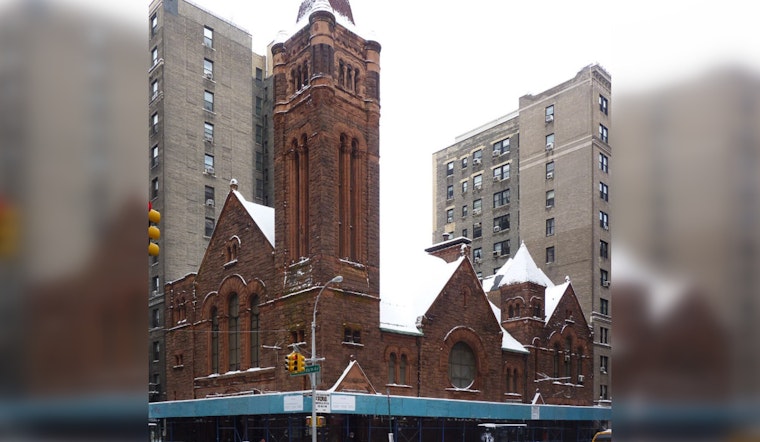
The 135-year-old West Park Presbyterian Church, a red-stone building on the Upper West Side, may undergo significant changes. The Landmarks Preservation Commission is scheduled to meet today to review a "hardship" application that could allow the sale and potential demolition of the historic property. The church has held landmark status since 2010, with the LPC describing it as "one of the best examples of Romanesque Revival in NYC," according to ABC7NY.
The Presbytery of New York City, the current owners of the church, state that financial challenges have left them with no option but to sell the property. Roger Leaf, a member of the Presbytery’s Board of Trustees, told Patch that the church "has no money left and no way forward if the hardship isn’t granted." The Presbytery’s plan includes a contract to sell the church to Alchemy Properties for a reported $50 million, contingent on obtaining a demolition permit to allow construction of a new condominium building featuring a smaller church and community space.
Not all parties support the proposed plans. A group of activists, celebrities, and politicians—including Mark Ruffalo, Matt Dillon, and J. Smith-Cameron—along with the offices of U.S. Rep. Jerry Nadler (D-NY) and Jumaane Williams, oppose the hardship application. They support preserving the church, which previously hosted The Center at West Park, an affordable arts community space. Debby Hirshman, director of The Center at West Park, said to Patch that the landmark is “unique in the number of spaces under one roof” and allows for affordable, accessible programs and $10 rentals for artists.
Adding to the debate, Upper West Side Councilmember Gale Brewer supports maintaining the building as an affordable arts center. “I was the one who landmarked it many years ago,” Brewer stated to Patch, adding, “We do not need more condos in on the Upper West Side right now.” The Landmarks Preservation Commission, which has approved only 13 hardship exemptions in nearly six decades, is facing notable community interest as it prepares for a public hearing to determine the church’s future.





