

























































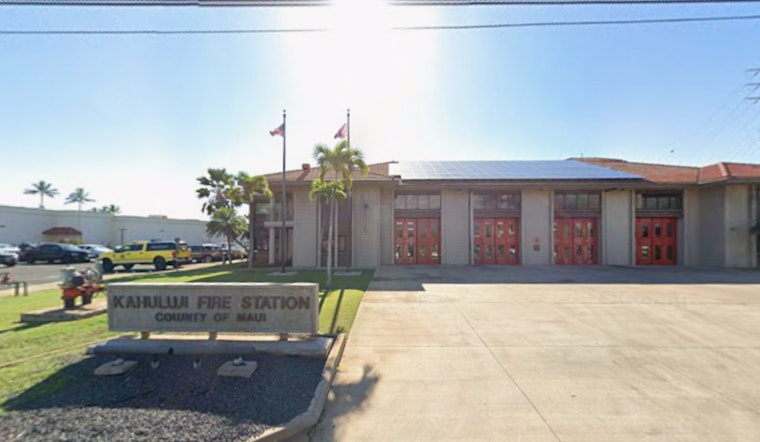
Hawaii fire chiefs recently reviewed new FirstNet equipment designed to restore cell service after emergencies. The upgrade adds 14 deployable units across the main islands, tripling Hawaii’s island-based disaster resources. Officials say the new units could help provide faster service to remote communities on Maui, Molokaʻi, and Lānaʻi.
What was added
The buildout adds 14 Network Disaster Recovery assets to Hawaii's dedicated FirstNet fleet, according to AT&T. That package includes four Compact Rapid Deployables, 6 miniCRDs and four low-Earth orbit emergency communication portables. AT&T reports that CRDs can cover roughly a two-mile radius with FirstNet service, while miniCRDs reach about a half-mile. The low-Earth orbit units provide fast satellite backhaul when fiber or microwave links are knocked out. Officials cast the mix of larger and highly portable units as a way to snap coverage back on in some of the state's most isolated and hazard-prone pockets.
How the gear works
These deployables are built specifically for public safety, not as a commercial side hustle. They connect to the FirstNet network using satellite links, do not depend on commercial power or fiber, and are available to subscribing agencies around the clock at no additional cost, as reported by the First Responder Network Authority. Agencies can request units through FirstNet Central or by phone, and local FirstNet teams handle the logistics and setup. The whole design is meant to let incident commanders stand up stable, secure communications even when cell towers, power and wired connections are all out.
Local chiefs welcome the boost
Hawaii Fire Chiefs Association president Jeff Murray said, "Today’s session put into focus how important these capabilities are for Hawaiʻi’s first responders." Maui County Fire Chief Brad Ventura said having the deployables "right here, ready to activate" will improve readiness for Maui, Molokaʻi, and Lānaʻi, as reported by Maui Now. FirstNet is already connecting public safety agencies in nearly 90 localities across Hawaii. FirstNet Authority CEO Michael Cannon and AT&T's Scott Agnew highlighted the public-private model and the tripling of the in-state footprint as benefits for local responders.
Why island geography matters
Island chains deal with a nasty mix of threats, from fast-moving wildfires and flash floods to undersea cable failures that can instantly sever commercial connectivity. Parking smaller, ruggedized units on the islands themselves cuts the need to wait on long-haul repairs or complex shipments that can be slowed by weather, distance or both. The Hawaii expansion is part of a broader Pacific push that also adds assets in Alaska and bolsters a nationwide disaster fleet, and the company has set a target of 14 hours or less to get portable sites to an initial emergency, AT&T reports. Officials say having compact units pre-positioned on the islands should trim response times and ease some of the inter-island logistical headaches that tend to show up exactly when they are least welcome.
How agencies can get one
Public-safety agencies already on FirstNet can request deployables through FirstNet Central or by calling customer care, and the assets are provided at no extra charge to those subscribers, according to the First Responder Network Authority. Agencies that have not yet signed onto FirstNet are being urged to talk with local public-safety advisors about how to enroll and tap into the program. Conference speakers said the bolstered island-based fleet should help first responders bring back mission-critical communications faster when the next emergency hits.




