

























































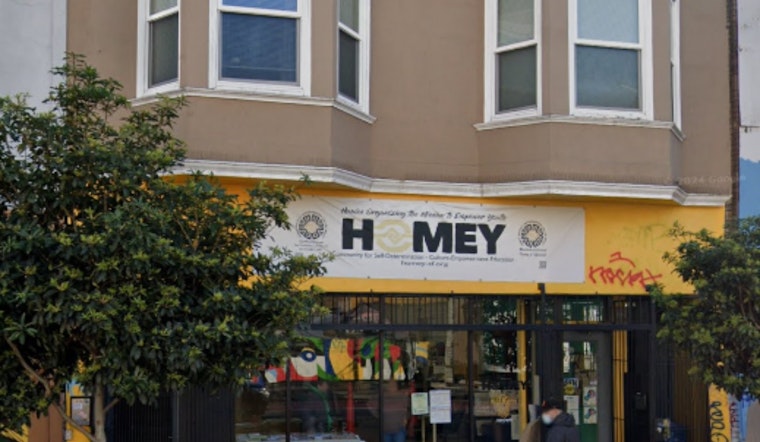
One of the Mission District’s most recognizable youth nonprofits is suddenly on the city’s financial hot seat, after San Francisco’s controller slapped Homies Organizing the Mission to Empower Youth (HOMEY) with its highest level of fiscal concern.
The controller recently tagged HOMEY with a “tier 3” designation, warning the group could lose access to city contracts due to how it has handled its finances. City monitors stated that the nonprofit failed to disclose its debts, produced unclear financial statements, and did not present a clear plan to address cash-flow problems. HOMEY disputes parts of that assessment, while acknowledging short-term liquidity issues, and states that it is working with city officials to resolve the matter.
Controller’s Review Puts HOMEY On High-Risk List
The Tier 3 label appears in the controller’s new annual nonprofit monitoring report, which examined 206 organizations in the city’s fiscal monitoring pool. Those nonprofits collectively received approximately $1.63 billion in city payments during the last fiscal year.
According to the report, 72% of the monitored groups met all standards. Another 16 organizations landed in “elevated concern” territory, including HOMEY and the Bayview Hunters Point Foundation, which both drew the top-tier “tier 3” warning.
An earlier email from the Office of Economic and Workforce Development tied HOMEY’s anticipated designation to defaulting on subrecipient payments of roughly $550,000. “We want to ensure that city departments fund programs that work,” Controller Greg Wagner said, according to the San Francisco Chronicle.
How San Francisco Keeps Tabs On Its Nonprofits
San Francisco’s nonprofit monitoring system is designed to identify fiscal trouble before it escalates into missed paychecks or shuttered programs. The controller’s framework outlines how departments are expected to track contractor performance, recognize warning signs, and coordinate any corrective actions with the Controller’s Office.
Those tools include written policies for corrective action and contract monitoring, which outline when an organization should be placed on elevated concern status and what it must do to be removed from that list. Over time, the city has updated these rules to include clearer performance measures and audit requirements, all aimed at keeping public dollars and critical services out of the danger zone. More details can be found in the Controller’s Office fiscal monitoring materials and its FY24 reporting, including documents from the Controller's Office.
HOMEY Pushes Back While Keeping Programs Running
HOMEY’s executive director, Roberto Alfaro, says the group has been upfront about its short-term debts, which he links to the build-out of a youth center, and that it is working to resolve what it owes to contractors.
Founded more than two decades ago to help prevent gang violence, HOMEY has received more than $14 million from the city in recent years. The organization has also distributed over 15,000 grocery boxes and provided approximately $1.1 million in emergency rental assistance during the last fiscal year, according to Mission Local.
“What upsets me the most is that they are saying we are bad actors,” Alfaro told the San Francisco Chronicle. HOMEY says it is negotiating repayment plans to cover its outstanding vendor bills while maintaining steady services for families who rely on them.
What A Tier 3 Label Really Means
In City Hall speak, a Tier 3 designation is equivalent the a flashing red light. It signals that the controller perceives a significant risk to public funds and client services, and that the nonprofit must collaborate closely with the city to address the issues.
Under the corrective-action framework, departments can limit an organization’s ability to compete for new contracts or require other remedies until the issues are corrected. The policies are designed to protect taxpayer money and maintain program operations while the city and the contractor work out a plan, as outlined in the Citywide Nonprofit Corrective Action Policy from the Controller's Office.
What’s Next For HOMEY And The City
The controller’s process gives HOMEY some runway: time to produce clear financial statements, lock in repayment agreements, and convince city officials its services will not be interrupted. But the window is not wide when public money and core neighborhood programs are on the line.
City departments and the Controller’s Office will be tracking whether HOMEY meets the required benchmarks. Nonprofits that fail to address flagged problems can lose city contracts or face even stricter restrictions.





