

























































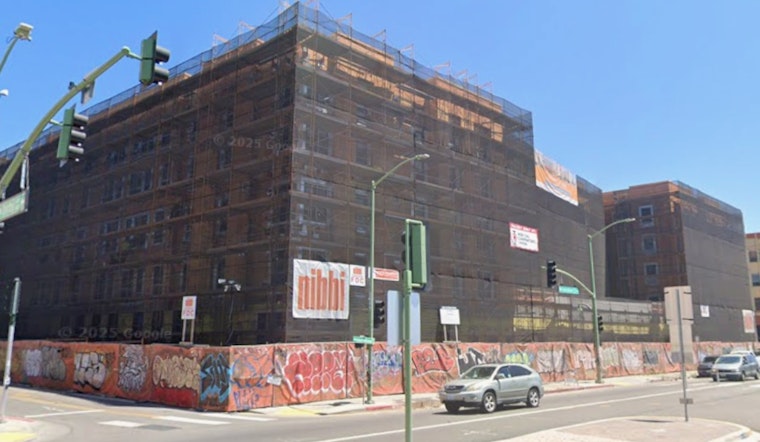
Along a busy stretch of International Boulevard, Oakland’s Native American Health Center is putting the finishing touches on Flicker, a five-story community clinic and housing complex that tries to do a lot in one footprint. The project pairs a ground-floor cultural center and dental clinic with 76 affordable apartments overhead. The center says the goal is to cut months-long waits for dental care, create more than 50 long-term jobs and offer Indigenous Bay Area residents a much larger gathering space. Organizers are aiming to start moving residents in by the end of the year, with full services expected in early 2026.
What Flicker Will Include
According to the Native American Health Center, the 32,500-square-foot building at 3050 International Boulevard devotes roughly 14,000 square feet on the ground floor to clinical and cultural services, topped by four floors of apartments. The ground level will house a cultural community center that can hold up to 300 people and a dental clinic with 20 operatories. NAHC says the expanded clinic should be able to serve about 10,000 additional members and provide roughly 20,000 more visits each year. The organization notes that the building, named Flicker in honor of California Native feather traditions, was designed with input from Ohlone, Pomo and other tribal members.
Who’s Building It and How It’s Set Up
The project is a partnership with Berkeley-based developer Satellite Affordable Housing Associates. SAHA’s property page lists the housing portion as Flicker Bird Homes at 3050 International, with one-, two- and three-bedroom units and on-site amenities such as a community room, laundry facilities and outdoor space. According to SAHA’s listing, rents will target roughly 20 to 60 percent of area median income, and the residential floors run from the second through the fifth levels. Nibbi Brothers is serving as general contractor and lists an estimated completion date in late 2025.
Demand Far Outstrips Supply
The 76 apartments did not stay under the radar for long. More than 1,470 households applied for the initial round of units, a response that hints at how tight the local market has become. That scramble lines up with the broader affordability crunch in Alameda County, where renters need to earn roughly $49.66 an hour to cover the average asking rent, according to California Health Report. Reporting by Next City quoted SAHA’s Nicole Guzman saying the team "are aiming to start moving in by the end of the year."
Why Health and Housing Belong Together
NAHC leaders say stacking homes directly over care is deliberate, not decorative. The combined model is meant to shore up both health care access and housing stability at the same time. Native American Health Center materials note that Flicker will add 20 dental operatories and expand capacity to serve roughly 10,000 more members every year, a response to long appointment waits at surrounding clinics. By placing care next to housing, NAHC says families can skip long transit trips, juggle fewer schedules and are more likely to keep routine and specialty visits.
Funding and the Price Tag
The full development carries a price tag of roughly $90 million, pieced together from NAHC reserves, philanthropy and state and federal funds. As reported by California Health Report, one notable federal contribution was $8 million in Community Project Funding requested by former state senator Nancy Skinner. Project leaders say the layered financing package was necessary to close the kinds of gaps that often stall community-serving developments.
Local Reaction
So far, neighborhood feedback has been more curiosity than controversy. Community groups have generally welcomed the new cultural and gathering space. Lorena Rivera, executive director of Oakland’s Intertribal Friendship House, told Next City that the extra cultural and meeting space is a "win" for local tribes and that NAHC information sessions drew strong interest. NAHC says it worked closely with California Native community members on public art and design elements so the building reflects tribal traditions rather than feeling like a generic clinic with apartments on top.
What to Watch Next
For now, the first wave of applications is in the books. SAHA’s property page currently shows the Flicker Bird Homes waitlist closed for the initial round, and organizers say they will reopen the list if additional slots become available. Prospective applicants are urged to keep an eye on the official listing for any updates. Officials expect move-ins to begin by the end of this year, with full operations ramping up in early 2026. Neighbors, meanwhile, will be watching for the cultural center’s public programming schedule once the doors open. For Oakland, Flicker will be an early test of whether place-based health and housing projects can really scale in a high-cost market without losing their community focus.





