

























































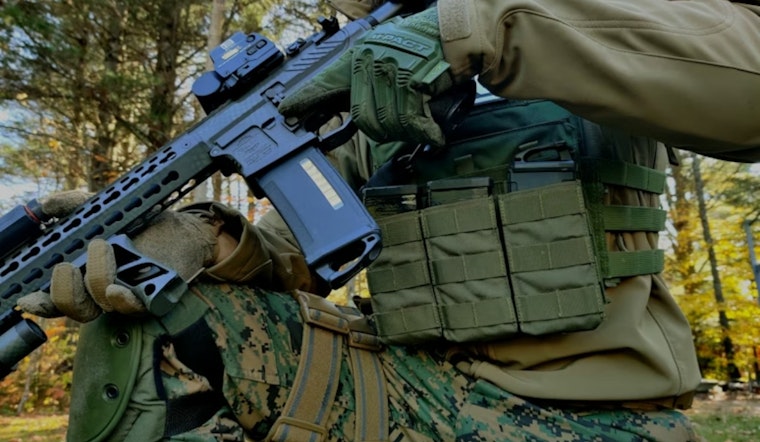
About 500 Marines from Camp Pendleton are heading to the Yuma area to bolster border security operations, with a mission that leans heavily on engineering work rather than direct law enforcement. Their tasks include reinforcing barriers, monitoring remote stretches of the Arizona border and putting up new National Defense Area signs along the line. Military leaders are stressing that this is a support role and that the deployment does not hand over civilian law-enforcement authority to the troops.
As reported by The San Diego Union-Tribune, Camp Pendleton confirmed it will send roughly 500 Marines to the Yuma area, where they will focus on monitoring and detection along with engineering and construction work. Base officials declined to say when, exactly, those Marines will be on the ground and fully at work in and around Yuma.
The Department of Defense has laid out the mix of units involved, saying elements of Combat Logistics Battalion 15, 1st Marine Logistics Group, known as Task Force Forge, are handling ground-engineering and logistical missions in the U.S. Border Patrol’s Yuma Sector. That includes barrier work and roadway surveys. DOD materials list duties such as reinforcing existing border barriers, emplacing National Defense Area signage and conducting roadway surveys and maintenance. The department frames all of this as support to U.S. Customs and Border Protection, not as front-line civilian law enforcement, and official imagery shows Marines welding barrier reinforcements and installing concertina wire along sections of the border.
What the Marines Will Do
U.S. Northern Command said in a press release that troops operating inside the Yuma National Defense Area have “installation security support authorities,” which cover patrolling, temporarily detaining unauthorized personnel and upgrading existing and planned border barrier infrastructure. People detained by Marines are to be turned over to federal law-enforcement partners for processing. Those duties fall under Joint Task Force-Southern Border’s broader mission to support border agencies rather than replace them.
Legal Limits And Land Transfers
The Department of the Interior recently transferred public land to the Navy to create or expand National Defense Areas along parts of the border, a move Interior Secretary Doug Burgum said “strengthens the U.S. government’s efforts along the southern border” and will support infrastructure work, according to a department press release. At the same time, federal law and Pentagon policy generally bar service members from performing civilian law-enforcement functions such as searches, seizures or arrests unless they are specifically authorized to do so, a limitation outlined in analysis by the Congressional Research Service.
Why This Matters Locally
The Pendleton deployment is part of a wider campaign under the current administration that has established multiple National Defense Areas and stationed active-duty troops along segments of the southern border. Earlier this year, Reuters reported that the Pentagon created new zones where troops are authorized to temporarily detain migrants or trespassers. Prosecutors in some of those areas have pursued trespass charges, prompting legal challenges and sparking questions in nearby communities about how clearly the rules are posted and how they are enforced.
Official photos and DOD video released on military media channels show Marines welding metal brackets to border barriers, emplacing warning signage and laying coils of concertina wire along Yuma-area stretches, underscoring the engineering-heavy nature of the mission as documented by DVIDS. Camp Pendleton and federal officials maintain that criminal arrests remain the job of Border Patrol agents and federal prosecutors, and the base has not released a public schedule for when its Marines will be active in the field. Residents near affected routes are being told to expect more signage, occasional military convoys and visible construction and reinforcement work in the coming weeks.
The deployment underscores how quickly military logistics can reshape conditions along the border and how those moves intersect with long-standing legal limits on using active-duty forces in civilian law enforcement. As the Yuma mission unfolds, debate is likely to continue, both locally and nationally, over how far National Defense Areas and military support should go in day-to-day border operations.




