

























































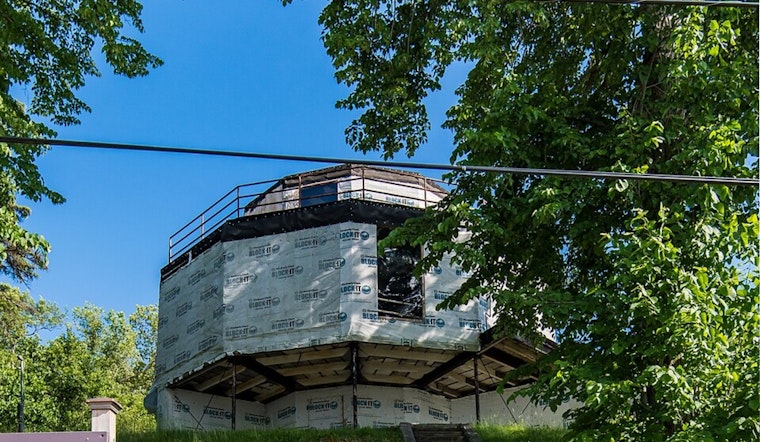
The House of Tomorrow, the 12-sided glass pavilion George Fred Keck designed for Chicago's 1933 Century of Progress, is finally starting to look like itself again. After years hidden behind plywood and weatherproofing, the once-futuristic landmark on the Beverly Shores bluff is getting its shine back as crews set massive new panes into the upper floors as part of a multi-million-dollar exterior rehab. The work is meant to bring back Keck's see-through vision while toughening the structure against decades of Lake Michigan abuse and long-delayed repairs.
Workers installed the new exterior glazing in November, recreating the home's floor-to-ceiling look with modern triple-pane glass, according to the Chicago Sun‑Times. The paper reports that each of the 12 new panes weighs nearly 1,000 pounds and that engineers reinforced the house's original spoke-and-wheel steel system to carry the extra load. Project architects told the paper that advances in glass technology and engineering finally made a faithful retrofit realistic, instead of just wishful thinking.
Indiana Landmarks is leading the exterior phase and says the work is backed by $4 million from the Great American Outdoors Act, administered through the U.S. Department of the Interior, according to a press release from the organization. The nonprofit says it launched the exterior restoration in April 2024 and that the scope includes structural strengthening, concrete floor repair, and restoration of the second- and third-floor glass walls while salvaging distinctive interior features for later work. The effort follows a long lease partnership between Indiana Landmarks and the National Park Service to preserve the Century of Progress houses.
On-site work and preservation trade-offs
"It is official: There is a tomorrow for the House of Tomorrow," Indiana Landmarks said when it announced the project, and the release outlines a careful strategy to keep original materials where possible while meeting modern standards. The group notes that the restoration will recover and store original Carrera glass wall cladding, metal baseboards, and parquet elements for future interior rehabilitation, and that the second and third floors will return to their original glass walls. Triple-glazed units are being used to balance transparency with energy performance and comfort for future occupants, Indiana Landmarks says, so the glass house does not feel like a greenhouse.
Next steps and public access
The renovation will also add the house's first elevator, restore the attached garage, and convert part of the former airplane hangar into bedroom space as the interior program is rethought for modern use, the Chicago Sun‑Times reports. Project leaders have said they envision some form of short-term or overnight lodging once interior work is finished, opening the door for more visitors to sleep inside Keck's experiment instead of just peering at it from the road. With the exterior well underway, the team will next scope interior rehabilitation and final uses while keeping National Park Service preservation standards front and center.
Why the House of Tomorrow still matters
Keck's dodecagon debuted as a showpiece at the 1933 Century of Progress exposition and introduced features such as push-button garage doors, an early GE dishwasher, central air, and a built-in airplane hangar that made it a milestone of American modernism, according to the National Trust for Historic Preservation. The Trust designated the house a National Treasure in 2016, arguing that its survival and rehabilitation offer a rare chance to interpret the fair's technological optimism for new audiences who are used to smart homes but not glass ones.
The House of Tomorrow's exterior work is part of a broader push to tackle deferred maintenance at Indiana Dunes National Park. Regional reporting notes the park received roughly $22 million in Great American Outdoors Act funding for historic buildings and infrastructure, with the House of Tomorrow included among priority projects. Indiana Landmarks will finalize plans for interior rehabilitation and public access once the exterior restoration is complete, with the goal of opening more opportunities for visitors to see Keck's landmark up close instead of through construction fencing.





