

























































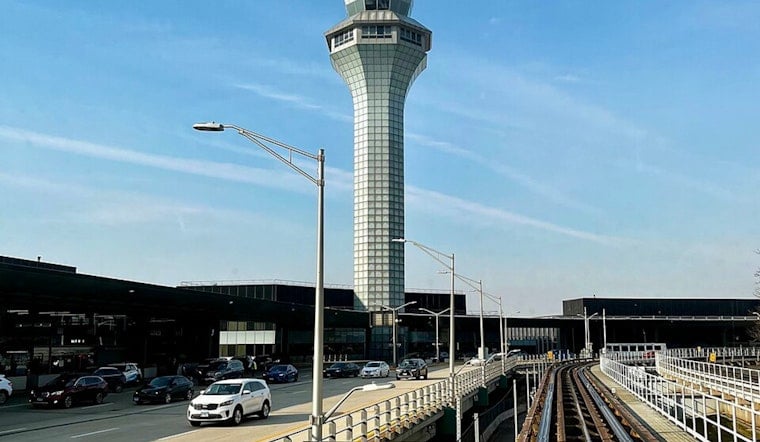
Chicago O'Hare International Airport woke up Monday as the epicenter of a national travel headache, logging more delays and cancellations than any other U.S. airport after a weekend of thunderstorms battered the Midwest. At least 2,036 flights were delayed and 263 were canceled across the country on Monday, with O'Hare bearing the heaviest toll of any single hub.
The trouble traces back to Sunday, when the Federal Aviation Administration implemented ground stops at five major airports — Chicago O'Hare, Chicago Midway, Denver International, Las Vegas International, and Tampa International — as severe convective weather swept across multiple regions, according to TheTravel. O'Hare's initial ground stop stretched more than three hours, from around noon to 3 p.m., and left average post-stop delays near 100 minutes. Evening storms then piled on, triggering 148 canceled departures and 124 canceled arrivals, making O'Hare the most delayed airport in the world that day, per the outlet's tracking.
By Monday, the fallout was still unfolding. MassLive reports that O'Hare had the most delays and cancellations among U.S. airports on Monday, with FlightAware data showing 87 delays and 48 cancellations at the airport that day. The outlet also notes O'Hare had the most canceled flights among U.S. airports from Sunday through early Monday, an assessment attributed to TheTravel. United Airlines alone reported 163 delays and 33 cancellations on Monday, according to the same MassLive report.
A Storm System That Never Really Stopped
The Midwest disruptions did not happen in isolation. Severe weather and FAA ground stops across the Northeast on August 7 and 8 had already forced nearly 2,000 flight cancellations nationwide, centered on heavy delays and departure halts at New York's John F. Kennedy International Airport, as reported by the Hindustan Times. That earlier round of storms compounded the crew-positioning and aircraft-rotation challenges major carriers faced once the Midwest ground stops hit over the weekend, the outlet notes.
Airlines scrambled to respond. American Airlines and United Airlines issued flexible rebooking waivers for travelers scheduled through O'Hare on Sunday, letting passengers change travel dates without paying change fees or fare differences, TheTravel reports. MassLive advises passengers with canceled flights to rebook as soon as possible, and recommends that travelers with overnight delays or cancellations keep essential items in carry-on luggage and review airline refund and rebooking policies.
Why a Few Hours on the Ground Snowballs Into Days of Delays
Ground stops themselves are nothing exotic in air traffic control terms. Federal Aviation Administration traffic management guidelines classify a ground stop as the agency's most restrictive measure, designed to hold aircraft at their departure points to prevent destination airports from becoming saturated or gridlocked during severe weather, according to the National Business Aviation Association. The measure keeps planes safely parked at feeder cities rather than circling over congested storm zones.
What turns a few-hour ground stop into a multi-day mess is capacity. Flight-tracking platform Flightradar24 recorded a historical peak of 153,359 commercial flights worldwide in a single 24-hour span during peak summer travel in July, as Hoodline previously reported. With schedules running near record capacity, airlines have very few unbooked seats to reaccommodate displaced passengers, so short ground stops ripple into days-long backlogs. The FAA's own operational records show severe weather accounts for roughly 74.26 percent of all U.S. flight delays exceeding 15 minutes, making it by far the leading cause of disruption in the national airspace system.
Extreme heat is adding its own strain at some hubs. At Las Vegas's Harry Reid International Airport, the number of days reaching 110°F or higher has doubled compared to mid-20th-century averages, according to the Associated Press. Hot, thin air reduces aerodynamic lift, increasingly forcing airlines to offload cargo or delay departures until temperatures cool.
What Stranded Travelers Are Entitled To
Passengers facing long delays do have some federal protections, though they come with limits. Under U.S. Department of Transportation regulations finalized in 2024, airlines must provide prompt, automatic cash refunds within seven business days for credit card purchases if a domestic flight delay exceeds three hours — or six hours for international flights — and the passenger declines rebooking, according to Dollar Flight Club. But the same rules do not require airlines to cover hotel or meal costs when a delay is classified as weather-related, per the U.S. Department of Transportation's Airline Customer Service Dashboard; that reimbursement obligation only kicks in for controllable delays like staffing or mechanical problems.
For now, MassLive advises passengers with affected flights to enable notifications for gate changes, delays and cancellations, check flight status regularly through their airline's app or website, and build in extra time when connecting through a busy airport. This is far from the first time storms have snarled O'Hare this year — Hoodline covered an April ground stop on departures and a similar arrivals halt the night before, along with a late-July meltdown in Denver that also stemmed from summer thunderstorms.





