

























































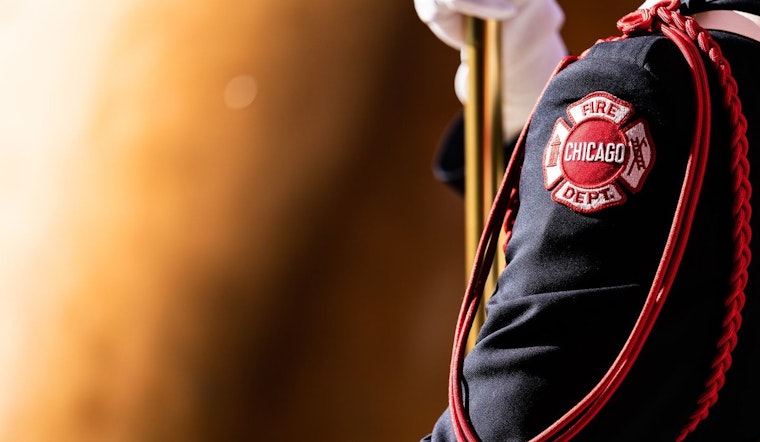
On Tuesday morning, a quiet Roseland firehouse turned into a place of pointed remembrance as the Chicago Fire Department joined the Gillen family to ring the bell for Lt. Scott Gillen, 25 years after he was killed while responding to a crash.
The brief ceremony at Truck Company 27 was held at the Engine 62-Truck 27-Battalion 22 station at 34 E. 114th St. Members of Truck Company 27 stood alongside Illinois State Police troopers, according to CBS Chicago. Gillen was 37 when he was struck and killed by an intoxicated driver while working a crash scene on the Dan Ryan Expressway on Dec. 23, 2000, the outlet reported.
Scott's Law And Its Origin
Gillen's death helped spur Illinois' move-over statute, now widely known as Scott's Law. The law directs drivers to change lanes away from stopped emergency vehicles or, if a lane change is not safe, to slow down and proceed with caution.
The Illinois State Police notes that Scott's Law was enacted in the early 2000s to cut down on struck-by crashes and protect people working on the roadside, and it remains a central piece of ongoing traffic-safety campaigns.
Penalties And Enforcement
State officials have repeatedly stressed that Scott's Law is not just a polite suggestion. Violations come with serious consequences, including substantial fines and, in cases involving injury, potential driver-license suspensions and additional penalties.
As CBS Chicago reported, fines can reach into the thousands of dollars, and the statute allows for license suspensions if a violation causes injury.
Why The Remembrance Matters
Two and a half decades later, state authorities say move-over violations and crashes are still putting emergency workers at risk on Illinois highways. The Illinois State Police regularly urges motorists to slow down and move over for anyone working along the roadside.
Tuesday's bell ringing at Truck 27 was short but pointed: a reminder that hard laws on the books are there because someone paid the ultimate price while trying to protect others.
For Gillen's family and his fellow firefighters, ceremonies like this serve as both memorial and message, a compact observance with a straightforward ask for drivers who pass stopped emergency vehicles on Chicago's expressways: move over, slow down, and let responders make it home.




