

























































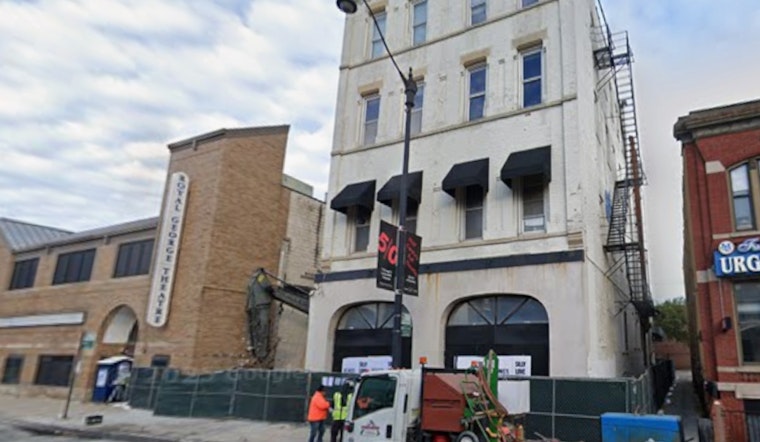
The curtain is finally coming down on the Royal George Theatre complex on the 1600 block of North Halsted Street in Lincoln Park. Crews have started tearing into the buildings, with the low-rise restaurant and other attached structures already gone. The long-vacant playhouse and its neighboring buildings are being cleared to make room for a new residential development, the latest step after months of permitting and years of on-and-off planning for the site.
Demolition On Halsted And What Permits Show
On-the-ground photos show the single-story section that once housed Balena coming down first, with demolition equipment working behind a temporary sidewalk canopy and activity visible from the alley. City demolition permits for 1633 and 1649 North Halsted were issued on October 31. The property covered a two-story theater, a parking structure, a restaurant space, and a four-story commercial building. Those details were documented in a report by Chicago YIMBY.
What Draper & Kramer Has On Deck
Developer Draper & Kramer is planning a nine-story building with 131 rental apartments, amenity areas, and ground-floor commercial space. The developer’s project page lists co-working and fitness spaces, a resident lounge, and a landscaped sky terrace among the planned perks. The proposal calls for about 4,500 square feet of street-level retail or restaurant space, 34 parking spot,s and storage for 131 bicycles, with upper floors stepping back from the street to reduce the perceived bulk along Halsted. The project description is laid out by Draper & Kramer.
Approvals, Concessions, And Neighborhood Pushback
The redevelopment won key city approvals after several rounds of design changes and negotiated concessions, including commitments toward improvements at nearby parks and toward affordable housing. Local business groups and the neighboring Steppenwolf Theatre backed the plan, while some residents and neighborhood associations objected during public meetings, citing concerns about the height of the building and the shadows it could cast. The approval process and the tradeoffs that came with it were reported by Block Club Chicago.
Permits, Demo Crew, And A Murky Timeline
Two demolition permits issued at the end of October cleared the way for Precision Excavation to start removing the existing complex, a step that Urbanize Chicago reports will allow the roughly $53 million redevelopment to move forward. Even with demolition well underway, neither the developer nor city permitting records list a firm construction start date or an expected opening for the new building, and the project timeline remains unknown.
From Theater Staple To Development Site
The Royal George was a longstanding presence on the Halsted theater corridor, but closed during the pandemic and never reopened. The property was later sold to Draper & Kramer as redevelopment plans moved ahead. Coverage at the time tracked the closure and the sale while the developer pursued approvals to replace the playhouse with new housing. Those milestones were reported by the Chicago Sun-Times.
Why The Wrecking Ball Matters Now
After years of proposals, redesigns, and community debates, the visible demolition marks a turning point. What had been a stalled development site is now being cleared and will be ready for construction once permits and schedules line up. As of late October, public records showed no new construction permit applications on the block, which makes the current teardown a notable step toward eventually breaking ground on the approved project. Chicago YIMBY documented those permit filings and site conditions.
What Neighbors Will Be Watching
Steppenwolf has publicly supported the redevelopment and is expected to work with the developer so that a portion of the new apartments can be used by visiting artists, a detail meant to keep at least some connection to the corridor’s theatrical roots. Between the planned park contributions, the affordable-unit set-aside, and the still-uncertain construction schedule, neighbors and local groups are likely to keep a close eye on what comes next as the project shifts from demolition to building. For now, crews are clearing the lot, and the missing marquee signals the end of a recent chapter in Halsted’s theater history.




