

























































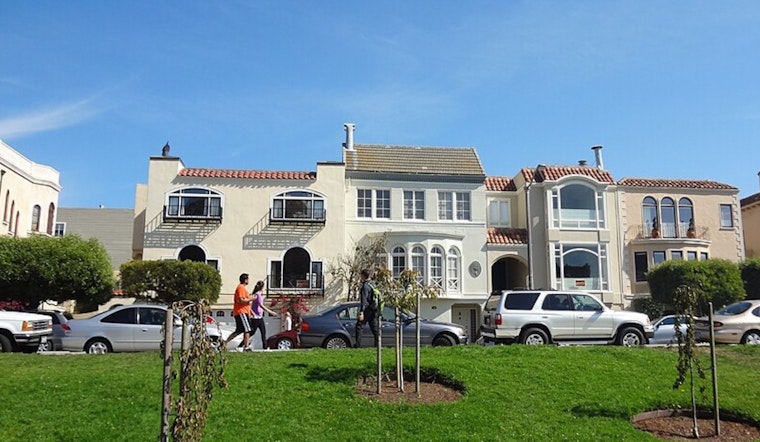
San Francisco's Marina District, a community renowned for its picturesque low-rise charm, is at the center of a zoning controversy as Align Real Estate advances with a proposal for a 25-story residential tower on the site of the neighborhood's Safeway. The project, aiming to introduce 790 new housing units to the area, is leveraging state housing laws despite local concerns and contrasting visions for city development.
The recent approval of Mayor Daniel Lurie's "Family Zoning Plan" sought to ease the citywide housing crunch by changing the building rules to allow for more dense housing, yet not to the extent of the proposed high-rise. Align's alignment with state density laws, such as Senate Bill 330 and Assembly Bill 2011, has largely tied the city's hands. These laws require over-the-counter approval, which, strategically, albeit contentiously, secures the site’s development rights. Mayor Lurie expressed his sentiments about the situation, stating, "This is just a developer playing games, because that won’t be possible once our plan goes into practice," in a statement per the SF Chronicle.
The Family Zoning Plan, passed Tuesday, represents the city's attempt to integrate higher-density housing more subtly. Lurie's office is keen to ensure development aligns with local needs, with a spokesperson stating, "A developer trying to sneak in a project before our plan takes effect is a complete violation of the spirit of that work," according to a report by KTVU. Their advocacy for a less obtrusive urban aesthetic is shared by some locals who fear the project will disrupt the Marina's small-town atmosphere and lead to a stark shift in the skyline.
Local housing advocates, such as Laura Foote of YIMBY Action, have a different perspective. In remarks reported by KTVU, Foote argues that "Every unit we build in San Francisco…that's another person who's not going to be pushed out, you know, to Stockton." She emphasized the Marina project's potential to introduce more affordable housing to an area that has not seen substantial development for more than a decade. The city's plan, which proposes a local density bonus program, could potentially reduce reliance on state laws for future projects by offering alternative incentives for builders seeking to incorporate affordable units.
Align used state law to calculate a dense base permissible figure for development and sought a 39% density bonus. "That’s really dense, compared to your typical residential neighborhood of San Francisco," said Christopher Elmendorf, a law professor at UC Davis, in a comment to the SF Chronicle. Elmendorf also noted that while Align could have sought even greater density bonuses, the chosen percentage likely represents a careful financial calculus on the developer's part.





_(2).jpg)