

























































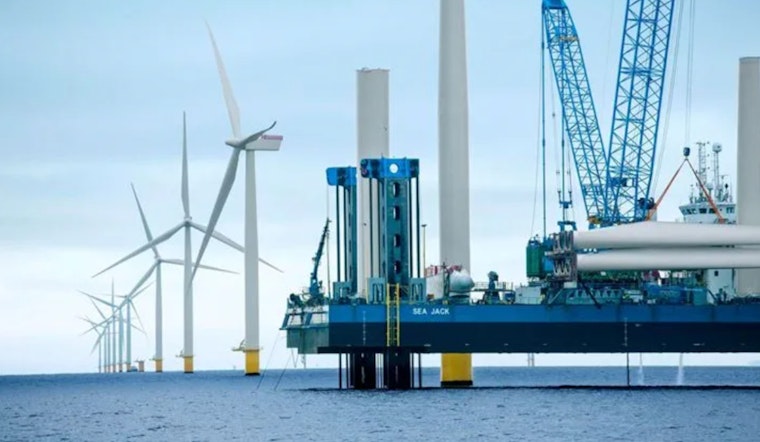
The U.S. Department of the Interior has put the brakes on the deployment of offshore wind farms, citing newly surfaced national security concerns. The pause affects projects in various stages of construction off the coast, including Vineyard Wind 1 and Empire Wind 1. According to a statement by the Department of the Interior, the government seeks to ascertain whether these wind projects can be reconciled with security needs that have arisen due to technologically savvy adversaries and the potential vulnerability of having such installations close to key population areas.
In what seems like an abrupt halt to regional green ambitions, the projects like Revolution Wind and CVOW – Commercial have been thrown into a state of limbo, while the Department of the Interior collaborates with the Department of War and other agencies to evaluate and perhaps remedy the identified security risks. "The prime duty of the United States government is to protect the American people," Secretary of the Interior Doug Burgum articulated, emphasizing the administration's stance in a move that aligns with the Trump administration's historical prerogatives, as noted by the Department of the Interior's announcement.
The challenge at the heart of this decision seems to be the interference that the towering wind turbines pose to radar systems, as outlined in unclassified U.S. Government reports. These reports suggest that the turbines create a radar "clutter" that both masks genuine moving targets and can create false ones. This issue is clear for departments whose primary objective is to ensure secure and unobstructed radar operations necessary for national defense.
While the Department of Energy acknowledged in a 2024 report that false alarm thresholds could be adjusted to cut back on some of the radar disruption, such adjustments aren't without consequence—the risk being that genuine threats might not be detected. Today's move asserts the administration's intent to address these offshore project concerns while maintaining the military's operational effectiveness, insisting on no compromise where American security is involved – this insight is derived from the press release by the Department of the Interior.
The matter presents a stark conflict between expanding renewable energy and securing national interests, a balance the current administration will undoubtedly continue to navigate as both sectors seek clarity on the path forward post-pause. Future discussions between the government and leaseholders, now imperative, will set precedents for how renewable energy projects can coexist with national security mandates, shaping the landscape of American energy and defense policies in the times to come.





