

























































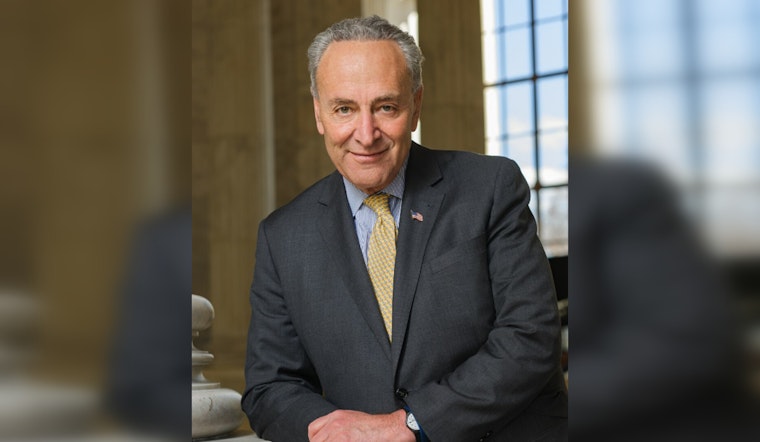
Senator Chuck Schumer has raised concerns about Instacart’s pricing practices, citing the company’s use of artificial intelligence to adjust prices for different customers. A joint investigation by Consumer Reports and Groundwork Collaborative found that the same product could be priced up to 23% differently depending on the customer. Schumer noted that this could result in additional costs of up to $1,200 per year for some families, according to NBC New York.
During a press conference celebrating the Buffalo Bills’ recent NFL victory, a video showing Schumer cheering “go Bills” before addressing two mass shootings gained significant attention online, reaching over 1 million views, as per Newsweek. Edited clips of the event have circulated widely on social media, including by conservative commentators. The Senator had announced his intention to address both the Instacart pricing issue and the recent tragic incidents before commending the Bills on their win over the Patriots.
The Consumer Reports investigation referenced by Schumer found that Instacart’s AI-driven pricing model led to different costs for consumers shopping at several major grocery retailers, including Albertsons and Kroger. Instacart responded by saying that these pricing experiments had ended at some retailers and that, in general, their practices do not result in higher overall charges for customers. The company stated that the experiments were intended to assess product price sensitivity to inform more strategic pricing, particularly for essential items.
Amid the controversy, Schumer has called on the Federal Trade Commission (FTC) to review Instacart’s pricing practices. During the same conference, he addressed the recent mass shootings in Sydney and at Brown University, highlighting concerns about antisemitism and gun violence. As reported by Newsweek, Schumer expressed his condolences to the affected communities and emphasized the importance of condemning all forms of hate.
As investigations into the Brown University and Sydney shootings continue, discussions have expanded to consider how political figures navigate policy matters alongside sensitive current events. With ongoing scrutiny and public discourse, both the impact of AI on retail pricing and broader social issues remain under close attention.





.jpg)