

























































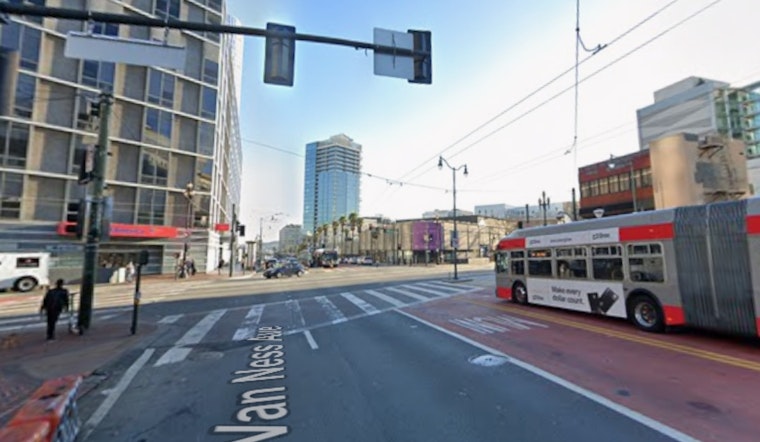
San Francisco planners have officially cleared the way for a soaring Crescent Heights tower at 10 South Van Ness, signing off on a 67-story high-rise that would drop more than 1,000 new homes into the Hub. The approved plan lays out an approximately 820-foot, glass-wrapped tower with ground-floor retail, a two-level basement garage, and space for hundreds of bicycles. Crescent Heights and industry coverage indicate that the project is now moving toward a construction phase, which could commence within the next two years.
According to The Real Deal, Crescent Heights has already started pricing out construction, design, and engineering teams, and some outlets are floating an early-2027 start date. That reporting also notes the firm is actively advancing a project, which industry sources estimate to be roughly a billion dollars. For local planners and developers, the move appears to be a potential turning point for the Hub, which has experienced sluggish progress on major tower proposals in recent years.
Planning sign-off and project totals
The San Francisco Planning Department's approval greenlights a mixed-use tower expected to produce more than 1.6 million square feet and 1,019 apartments, as detailed by SF YIMBY. The unit mix breaks down into junior one-bedrooms, 465 one-bedrooms, 305 two-bedrooms and 106 three-bedrooms, with around 11,820 square feet reserved for ground-floor retail. Plans call for a two-level basement garage with room for about 255 cars and roughly 388 bicycles, a setup that leans into the site's transit-rich location.
Design changes and the affordable-housing trade
Crescent Heights' own project page still points to an earlier 55-story concept credited to Kohn Pedersen Fox, a reminder of how much the proposal has evolved. Trade and local coverage have also highlighted other consultants who appear in later permit filings, including Arcadis on some of the most recent documents, underscoring how both the design and the consultant roster have shifted as the plan moved forward. Those design tweaks sit alongside the developer's earlier decision to transfer a Mission Street parcel to the city to meet off-site affordable-housing requirements, a deal that cleared the path for the market-rate Hub tower while the Mission site is slated for fully affordable housing.
Where it sits in the pipeline
At about 820 feet, the tower would join a short list of projects with the potential to redraw San Francisco's western skyline. SF YIMBY places the building behind only a few taller proposals still in the pipeline. The outlet points to nearby efforts such as high-rises pitched for 524 Howard Street, the Oceanwide Center site, and a large-scale proposal at 77 Beale Street as other skyline-level contenders in various stages of planning or limbo. For neighbors and city officials alike, the core questions are familiar: how to add serious housing volume while still protecting affordability and managing the noise, dust and traffic that come with a mega-project.
State law and streamlining
The application leans on California's Senate Bill 423 and the State Density Bonus Law, using those tools to boost residential capacity and tap into streamlined approvals available to qualifying multifamily projects. SB 423 establishes ministerial pathways and sets specific affordability thresholds for projects that want to use the expedited track, details that are spelled out in the bill text and related analyses. The framework of LegiScan helped shape how the development team packaged its proposal for Planning Department review.
Crescent Heights has not published a full construction budget or locked in a formal groundbreaking date, although industry reporting continues to peg the project cost near $1 billion and keeps an early-2027 launch squarely in play.





