

























































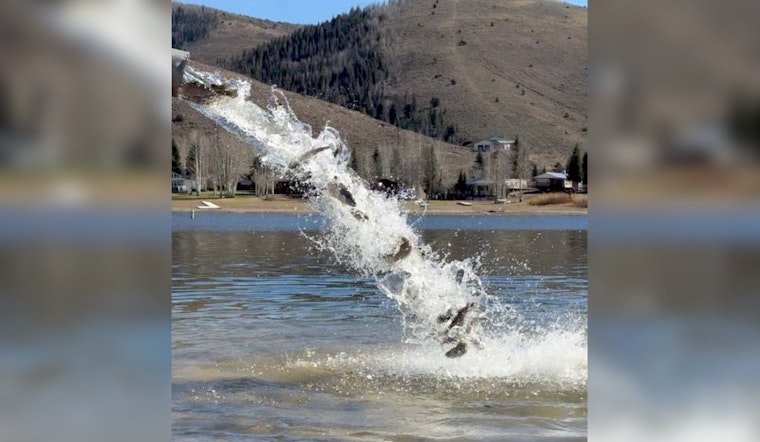
Utah's Division of Wildlife Resources (DWR) continues its longstanding tradition of stocking local waterbodies with fish. In a decisive effort to maintain and enhance the state's fishing opportunities, over 11.6 million fish were added to Utah's ecosystems this year, as detailed by Utah's Division of Wildlife Resources. Although this marks a decline from last year's 12.8 million, it is still a massive operation involving the introduction of 1.1 million pounds of fish across 655 waterbodies.
The DWR not only aims to boost fish stocks but also strives to carefully adapt to potentially harsh environmental conditions. With an acknowledgment of the challenges posed by changing weather and drought, the DWR has begun to stock fewer, yet larger fish in certain environments to hopefully increase survival rates. In a statement obtained by Utah's Division of Wildlife Resources, Fish Culture Coordinator Richard Hepworth explained, "We are continually evaluating the processes of growing and stocking fish and continue to make proactive changes to address drought impacts, increasing water demand and to also meet the demands of a growing population in Utah."
This tradition of fish stocking in Utah is far from new, originally beginning over a century and a half ago. The first formal stocking by train occurred in 1871, and Utah's inaugural hatcheries were established by 1897, fostering a home-grown approach to fish production. Presently, Utah boasts 13 hatcheries with new developments on the horizon, such as the Loa Fish Hatchery expected to be operational by 2027, to further support these efforts.
The bulk of this year's stocking, amounting to 10.6 million fish, originated from DWR's hatcheries, per the official report. In attempts to create better adapted fish populations, DWR has included a variety of species and even taken to raising sterile fish, a measure deemed essential in managing fish numbers in specific bodies of water. According to Utah's Division of Wildlife Resources, stocking practices not only provide valuable fishing opportunities but also assist in the recovery of threatened species like the June sucker, which was downlisted from endangered to threatened under the Endangered Species Act in 2021.





