

























































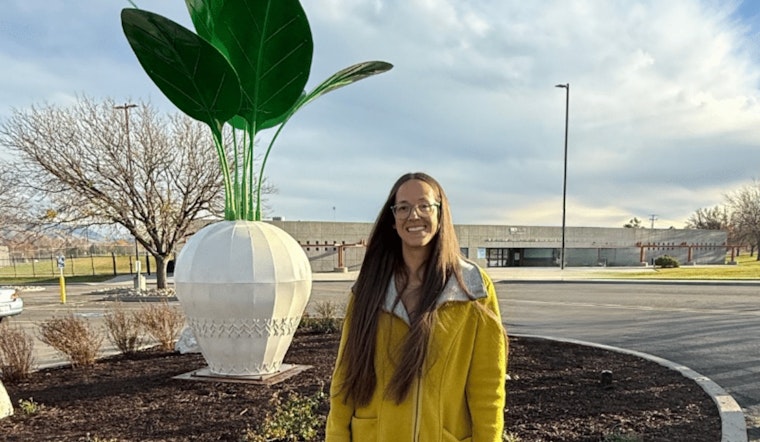
In West Jordan, a city that has seen a radical transformation from bucolic farmland to a bustling urban center, artist Laura Erekson has crafted a reflective homage to the region's agrarian past. Taking inspiration from the site of the now-defunct sugar factory, once a cornerstone of the local economy, Erekson unveiled a sizable sugar beet sculpture made of steel, stationed thoughtfully outside the Canyon View Credit Union Community and Arts Center. According to a report by West Jordan's newsroom, the artwork, titled "Rooted," was formed by hand and required considerable effort from July to mid-November, marking an achievement both for the artist and the city.
The steel beet is not just an art piece but a nod to the city’s history. The valley where the Arts Center now stands was once productive ground for sugar beets, with Erekson's "Rooted" art piece symbolizing community unity and connection to the land. Throughout the creation process, Erekson endured what she described as "very intense" long nights in her garage studio prior to the on-site assembly—creating the beet's intricate metal sheets and internal rod structure which were admirably built by hand.
Erekson's background, as detailed in West Jordan news, includes earning a BFA from Brigham Young University and a Masters of Art Teaching from George Mason University. Her resume boasts an installation at the prestigious Hirshhorn Museum and Sculpture Garden, with her body of work frequently incorporating "found objects" and paying tribute to the relationship people share with their environment. On her values, Erekson told West Jordan's newsroom, "We’re forgetting that it’s important to know where we come from. [The land] is part of us."
Her art can be found in the Springville Museum of Art, in galleries around Park City, and at the Church History Museum, with options to purchase prints and explore details of her collections online and on Instagram. In the spirit of Erekson's commitment to involving her surroundings in her work, her children too played a role in the creation of "Rooted." As she revealed, they assisted with textural elements, "peeled off leaves and pliers," embedding their own drawings into the sculpture, effectively making the artwork a family-affiliated piece. "They actually helped with the texture around the base, peeled off leaves and pliers," she said, capturing the generational connectivity Erekson values so much.
With "Rooted" taking its permanent place to the north of the Arts Center, it meticulously personifies not just West Jordan's growth from its rural origins but also functions as an ongoing dialogue between the city's past and its ascending future. Standing as a tangible account of West Jordan’s commitment to acknowledging its agricultural heritage, the piece reaches beyond simple aesthetics to touch on deeper social and historical connotations, offering a space for reflection as the city continues to evolve.





