

























































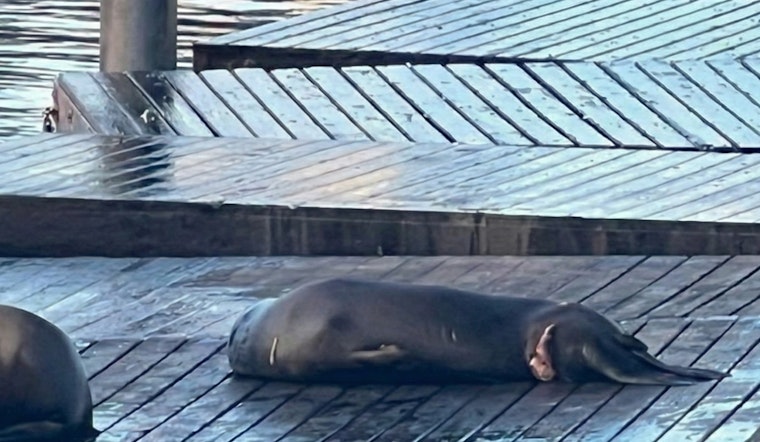
A wounded California sea lion has been turning heads near Pier 39, where onlookers and rescuers have spotted a deep, fresh gash that experts say could be the result of a shark bite. The Marine Mammal Center and local crews are keeping close tabs on the animal from a distance and say they will wait for it to haul out onshore before attempting any hands-on evaluation, in order to avoid adding extra stress.
The animal, described by responders as a large, sub-adult male, was first reported through the center’s hotline on Jan. 6 and has since been seen resting on the floating docks by Pier 39. Officials say he appears to be in generally good body condition but has a clearly fresh wound on his lower extremities that will require a veterinarian’s exam to determine the cause. The initial report was shared by KRON4.
"A veterinarian will need to inspect the wound to determine the exact cause," rescuers told reporters, adding that the injury "appears consistent with a shark bite," though that has not been confirmed. Crews say the sea lion was alert and bolted into the water when approached, so response teams are proceeding carefully and will only attempt a capture when conditions are safe and low-impact. KRON4 relayed the center’s latest update on the situation.
How Rescues Typically Work
The Marine Mammal Center’s Special Rescue Operations team relies on a mix of acoustic tracking tools, light sedative darts and careful netting when an on-site capture is warranted, then moves the animal to its hospital for a full veterinary workup and treatment. Past summaries from the center describe briefly darting and sedating an animal to slow its movements, then using nets and crates so staff can examine wounds and remove any entangling debris. A recent operation recap from The Marine Mammal Center walks through those tactics step by step.
Why This Matters to the Bay
The Pier 39 sea lions may be tourist magnets, but they are also working through a long list of threats that make quick intervention more critical, including fishing-gear entanglements and infectious disease. Veterinarians and researchers have recently flagged a spike in leptospirosis cases that has driven up the number of sick sea lions arriving at regional rescue centers. The San Francisco Chronicle has detailed how that outbreak is straining local response efforts.
What the Public Should Do
If you come across an injured or entangled marine mammal, stay back, keep pets away and resist the urge to feed, touch or try to move the animal. Federal and state guidance lists dedicated hotlines for live-stranding reports, and NOAA Fisheries maintains a reporting page with regional contacts, including The Marine Mammal Center’s 24-hour hotline at 415-289-SEAL for animals in the Bay Area. NOAA Fisheries posts the full list of numbers.
For now, response teams are watching the injured sea lion from boats and from shore. They plan to step in only when he hauls out in a safe, accessible spot and a veterinarian can immediately examine the wound. Any rescue outcome or patient admission is typically shared by the center and partner groups after the animal has been secured and transported for care.



