

























































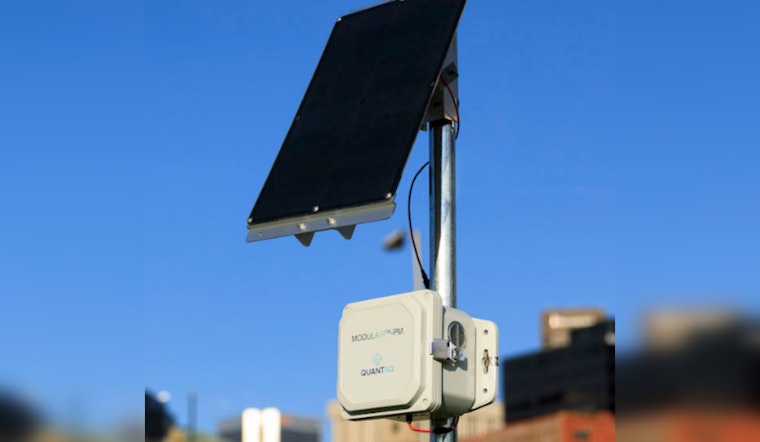
Boston has wrapped up the installation of its first environmental sensor network, setting a new benchmark for community-driven tech initiatives. After a four-year journey of planning and deployment, the sensor network, part of the Common SENSES action-research project, is now fully operational and set to empower residents along Blue Hill Avenue with data-driven tools for environmental monitoring and problem-solving.
The project, illuminated by the Boston government website, leans heavily on community engagement, with over 300 locals contributing through various workshops and events. This full-throttle approach embedded community narratives into the technological fabric, minting a sensor grid inclusive of 24 air quality nodes and 51 instruments to clock heat and noise. A map resonant with community touchpoints delineates the spread of sensors, addressing concerns such as air pollution and urban heat islands.
Data from this hyperlocal matrix will guide the hands of city planners, activists, and policy-makers as they carve out strategies to buffer neighborhoods against environmental risks. Santi Garces, Chief Innovation Officer, told the city’s news portal, "In our city, the most impactful solutions are those that are community-led," praising the collective norm and the transformative potential it harbors.
Common SENSES, armed with cutting-edge anticipation models and green infrastructure impact assessments, furnishes the locals with granular data that could spawn a renaissance of vigilant environmental stewardship. "Now we have the data, numbers do not lie. Stories plus data equal the truth," said Nicole N. Flynt, a community organizer with Project R.I.G.H.T. Inc, as noted by the city's official website. The mesh-up of sensors offers not just a snapshot but an ongoing narrative, capturing the environmental rhythms, block by block, and enabling a newfound responsiveness to the sentinel fences of an urban ecosystem.
Academic collaborators have not been idle bystanders, with Northeastern University's Professor Danai Toursoglou Papalexandridou championing the belief in the omnipotence of community-led design, as reported by the city's announcement. The success of this dense array of data points to a municipal future where governance is not just atop the city but woven within its streets, an architecture of attentiveness entrusted to the hands and hearts of those it serves.
With the project shifting into its analytical phase, the City of Boston's Office of Emerging Technology continues to engage in innovative ventures that promise to refine urban existence and fortify ecological resilience. Among these are endeavors like Curb Lab and Project Green Light, pushing the frontiers of AI to smooth the skeins of urban life and mobilize climate tech innovation in sync with the city's environmental aspirations.




