

























































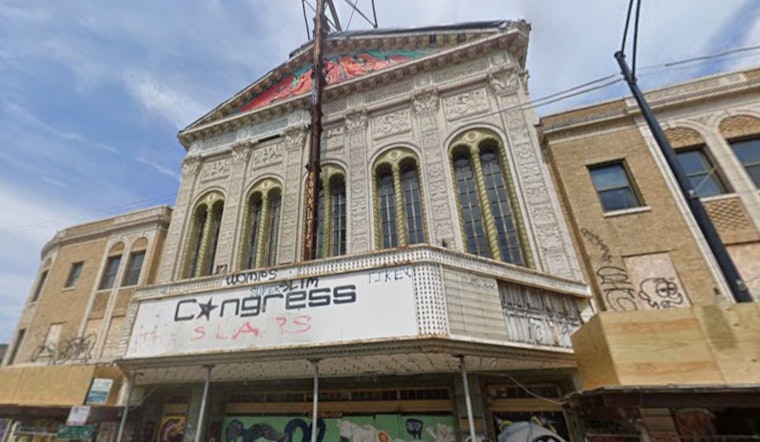
Chicago is preparing to put serious skin in the game to resurrect one of Logan Square’s grand old landmarks. On Wednesday, the City Council’s Finance Committee signed off on a plan to back roughly a $25.2 million federal loan, secured by Chicago’s share of Community Development Block Grant (CDBG) dollars, as a last-ditch effort to save the long-shuttered Congress Theater. The financing is pitched as the move that could finally push a roughly $88 million overhaul across the finish line after years of false starts and deferred repairs, clearing the way to restore the 1926 movie palace as a music venue with street-level retail and nonprofit office space.
City officials make the case
Deputy Planning and Development Commissioner Jeff Cohen told the Chicago Sun-Times the city is turning to a HUD-backed loan because traditional lenders have balked at underwriting a deep rehabilitation of a live-entertainment venue. Cohen acknowledged that if the developer defaults, Chicago would be on the hook, with the city’s CDBG allocation potentially tapped to cover debt payments on what staff described as a 20-year note. In other words, the city is betting federal anti-poverty funds on a historic theater revival it insists pencils out.
What the project would deliver
The redevelopment plan calls for restoring the Congress as a roughly 3,500-seat live music venue to be operated by AEG Presents. Plans also include about 13,000 square feet of retail space, 23,000 square feet of office space for nonprofits, and 16 apartments, 14 of which would be affordable. City officials have already reworked local subsidies, including a roughly $27.25 million tax-increment financing package, to help pay for the larger $88 million renovation, according to Block Club Chicago.
How the federal loan would work and the risks to public dollars
The administration is targeting a HUD Section 108 loan guarantee, a program that lets CDBG grantees pledge current and future CDBG allocations as collateral for large loans. HUD guidance notes that Section 108 financing can be repaid over terms as long as 20 years, and Preservation Chicago reports the Department of Planning and Development is seeking about $25.25 million on a 20-year schedule, with developers responsible for associated fees. City staff say the loan would fill a stubborn financing gap, while also warning that tying up CDBG dollars exposes those federal funds to repayment risk if the project stumbles.
A long history of starts and stops
Opened in 1926 and designated a Chicago landmark in 2002, the Congress has been mostly dark since 2013, when the city ordered it closed after a string of code and safety violations. Since then, local leaders have repeatedly tweaked subsidy terms in an effort to keep the revival alive. Supporters argue the overhaul will breathe life into a blighted stretch of Milwaukee Avenue, while critics point to the climbing public price tag and a decade of delays, as reported by the Chicago Sun-Times and Block Club Chicago.
Next steps
The Finance Committee vote advances the proposal but does not lock it in. The city still must formally submit its Section 108 application to HUD, and the full City Council would have to sign off on any guarantee tied to Chicago’s CDBG share before permanent construction financing can close. Preservation Chicago notes that officials view the HUD loan as potentially the final piece of the puzzle, and developers say stabilization work could begin once the federal guarantee and remaining funding are secured. For now, the Congress remains in limbo, waiting to see if City Hall’s big bet pays off.





