

























































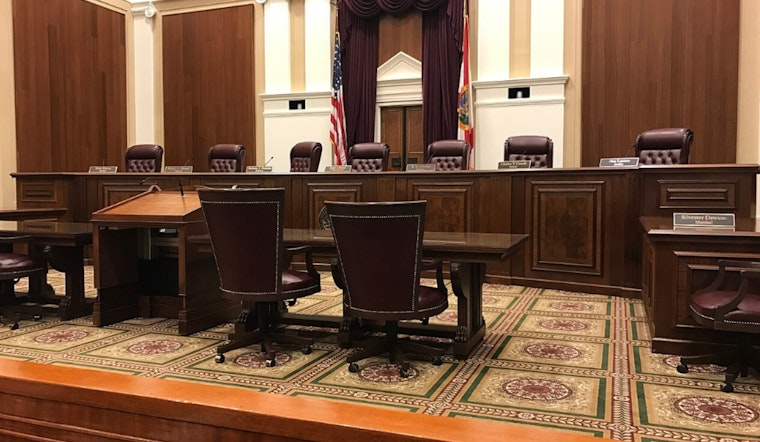
In a Miami courtroom, Harrel Braddy is undergoing resentencing for the murder of five-year-old Quatisha Maycock, a case in which the victim was left in the Everglades. Nearly 30 years after the events that led to Braddy's conviction, NBC Miami reports that State Attorney Abbe Rifkin addressed the victim during the opening remarks of the trial.
Shandelle Maycock, the mother who survived the attack, provided testimony about the night Braddy, whom the family had met through a church group, became violent after being asked to leave her apartment. According to the Miami Herald, Shandelle recounted that Braddy’s actions led to her and her daughter being taken to the Everglades, where Quatisha’s body was later found with injuries consistent with an alligator attack.
The trial revisits the events from 1998, including Braddy’s acts of violence, the abduction, and the disposal of his victims, only one of whom survived. Shandelle Maycock testified about the experience, while her daughter did not survive. NBC Miami reports that prosecutors stated Braddy’s actions were motivated by rejection from Shandelle and aimed at preventing Quatisha from identifying him.
After his initial sentencing in 2007, a U.S. Supreme Court ruling on Florida’s death-penalty law prompted the resentencing trial. Braddy now faces the possibility of receiving the death penalty under Florida’s updated law, which permits a death sentence to be recommended by an 8-4 jury vote, though the judge retains the final decision, as reported by the Miami Herald. The defense team has postponed their opening statement and has not yet presented their arguments.
The case continues to draw public attention due to its severity and its connection to broader issues surrounding the death penalty and judicial responsibility. Braddy, a convicted felon with a history of violent offenses, highlights questions related to criminal justice, community safety, and capital punishment.





