

























































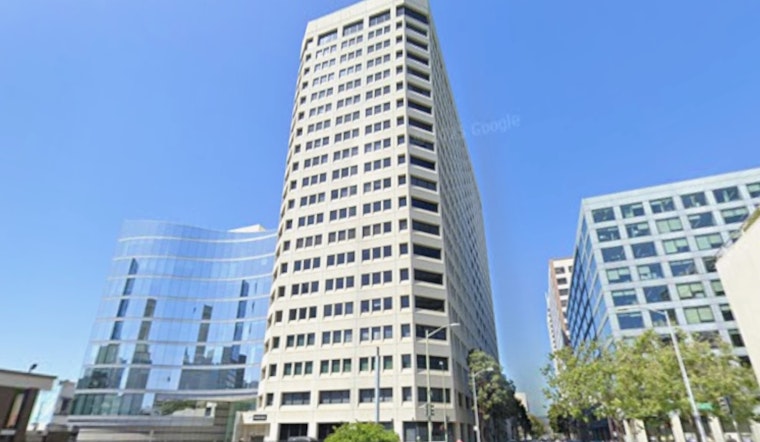
An affiliate of Deutsche Bank has quietly taken control of three of downtown Oakland’s biggest office towers, pulling in roughly 975,000 square feet of space at a time when vacancies are stubbornly high, and property values are sagging. The move instantly reshapes a big chunk of the city’s core office market, and tenants, small businesses, and City Hall will be watching closely to see whether the lender sells, holds, or tries something more ambitious with the buildings.
According to Alameda County records cited by the Mercury News, a deed in lieu of foreclosure was recorded last Tuesday that names a Deutsche Bank affiliate as the new owner of three downtown parcels. The filing shows the lender is asserting roughly $442.1 million in unpaid debt tied to the properties and also pulls in a nearby parking garage at 2353 Webster Street as part of the transfer. The paperwork formalizes control after months of strain on the buildings’ financing and occupancy.
Starwood Capital picked up the three-building portfolio in 2019 for about $494 million, financing the deal with roughly $364.5 million in debt, according to transaction reporting by Connect CRE. Once Bay Area office vacancies climbed and leasing momentum faltered, that level of leverage left the owner exposed to just this kind of lender takeover.
The towers involved are 2101 Webster, 1901 Harrison, and 2100 Franklin. Togethe,r they represent nearly 1.0 million square feet of office space, according to property data cited by The Real Deal. Published figures differ slightly by source, but they consistently show 2101 Webster as the largest of the three and the combined footprint as a meaningful slice of downtown Oakland’s total office inventory.
How the lender recorded the transfer
A deed in lieu of foreclosure is a formal document that lets a property owner hand title to the lender without going through a public foreclosure auction. In Alameda County, those documents are indexed and stored by the Clerk-Recorder’s office, where they are available for public inspection. That record trail is how reporters and market watchers confirmed the Jan. 20 filing. Once the deed is recorded, it kicks off the administrative process: indexing the document and addressing any documentary transfer taxes that come with the change in ownership.
What this means for downtown Oakland
Oakland’s office market has been limping along for years. By the end of the fourth quarter of 2025, industry data showed vacancy running well into the mid-20 percent range, leaving large swaths of space sitting dark and pushing rents and values lower. CBRE data and local reporting indicate that those soft conditions make it likely the towers would sell for a fraction of their 2019 price, a possibility analysts and local outlets have been flagging for months.
Next steps and local impact
Once a lender takes title, a familiar playbook usually follows. The bank can put the buildings on the market, hang onto them while hunting for tenants, or try to reposition the space for other uses. Local coverage has noted that lenders often prefer to sell loans or buildings rather than play long-term landlord, although any sale in today’s market is likely to come at a steep discount to prior book values, a dynamic the San Francisco Chronicle and industry outlets have been tracking downtown.
As of the filing, neither Deutsche Bank nor Starwood had publicly laid out what comes next, and requests for comment were not immediately returned, according to local reporting. In the meantime, office tenants and the street-level businesses that live off weekday foot traffic are keeping an eye on any shifts in building management, parking arrangements, and ground-floor retail as the lender decides how to handle its newly acquired portfolio.
The deed cements a major ownership change in the heart of Oakland and underscores how quickly stressed office loans can change hands in the current climate. For the city, it is another data point, and another test case, for whether big institutional office properties can be stabilized, repurposed, or sold at prices that support a long-term downtown recovery.


