

























































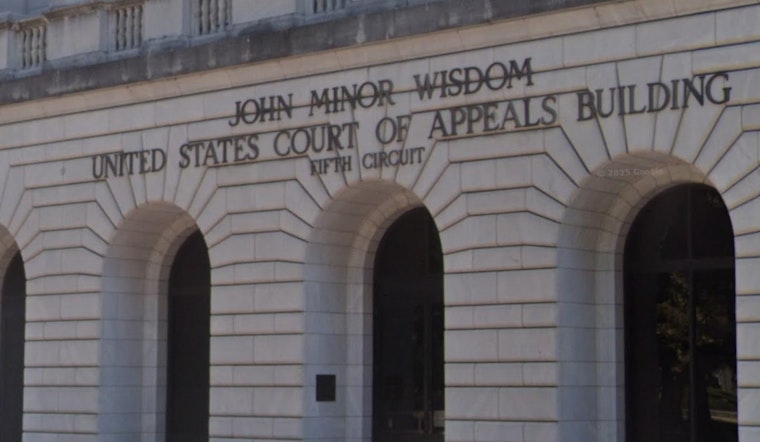
Texas’ headline-grabbing immigration crackdown is getting a second look from some very familiar judges. The Fifth U.S. Circuit Court of Appeals has agreed to rehear, en banc, the legal fight over Senate Bill 4, the 2023 state law that would let Texas officers arrest people who enter the state without federal authorization and even order them back to Mexico.
The full court will now revisit an earlier three-judge ruling that has kept SB 4 on ice. At stake is whether Texas can carve out a bigger role for itself in immigration enforcement or whether long-standing federal preemption rules keep the state firmly on the sidelines.
The decision to go en banc was first reported by The Texas Tribune, which noted that the full bench will reconsider the panel’s July ruling. The Tribune points out that the case now lands before the entire 17-judge court, which has a strong majority of Republican appointees, a lineup that legal observers say could shape how aggressively the Fifth Circuit tests the limits of federal control over immigration.
What SB 4 Would Do
SB 4, passed in late 2023, creates a new state misdemeanor for unauthorized entry into Texas and a separate “reentry” offense for people who have previously been removed. The law authorizes state and local officers to arrest people suspected of crossing the border illegally and lets magistrates order an arrested person back to Mexico instead of moving forward with prosecution. Those powers are laid out in the bill text posted on the Texas Legislature’s website.
Supporters say SB 4 fills what they see as dangerous gaps in federal enforcement along the Texas-Mexico border. Opponents counter that the statute steps directly into territory reserved for the federal government and threatens due process for migrants and longtime residents alike.
Why the DOJ Withdrawal Matters
The United States initially sued to block SB 4, then voluntarily dropped its own case, leaving nonprofit organizations and El Paso County as the remaining plaintiffs. That shift has made the legal path tougher for SB 4’s challengers.
As the Fifth Circuit’s written ruling explains, in an opinion available on Justia, the court requires plaintiffs to show a concrete, imminent injury to satisfy Article III standing. With the federal government now on the sidelines, the en banc court is expected to drill down on whether local governments and advocacy groups can clear that standing bar on their own.
Local Officials Say Costs Would Be High
On the ground in El Paso, local officials say SB 4 could blow a hole in county resources. Leaders there have warned that the law would trigger thousands of additional arrests and overwhelm already stretched jails, courts and budgets.
According to The Texas Tribune, El Paso County attorney Christina Sanchez has called SB 4 an unfunded mandate that would erode trust between law enforcement and immigrant communities. The lawsuit challenging the law includes local groups such as Las Americas and national organizations like the ACLU, which argue the measure would open the door to racial profiling and interfere with the delivery of legal services.
Border Numbers Could Change The Legal Story
When Texas lawmakers pushed SB 4 through in late 2023, they leaned heavily on eye-popping crossing numbers. U.S. Customs and Border Protection recorded roughly 249,785 encounters along the southwest border in December 2023, a modern peak that helped fuel claims of an emergency.
More recent federal data, summarized in policy analysis by the Migration Policy Institute, show that irregular crossings have dropped sharply since that late 2023 surge. Those changing numbers will not decide the constitutional question, but they will shape the factual backdrop as judges weigh Texas’ argument that extraordinary state action is needed at the border and as they assess whether the remaining plaintiffs face a real and imminent risk of harm.
What’s Next
The Fifth Circuit’s order granting en banc rehearing tosses out the earlier three-judge opinion and sets a new schedule for additional briefing and oral argument, according to the docket and related court orders.
The Office of the Attorney General has urged the full court to uphold SB 4 and says its lawyers “look forward to aggressively defending Senate Bill 4.” If the en banc court keeps the injunction in place, top Texas Republicans have signaled they are prepared to take the fight to the U.S. Supreme Court, a move that could keep one of the country’s most closely watched immigration battles tied up in litigation for months or even years.



