

























































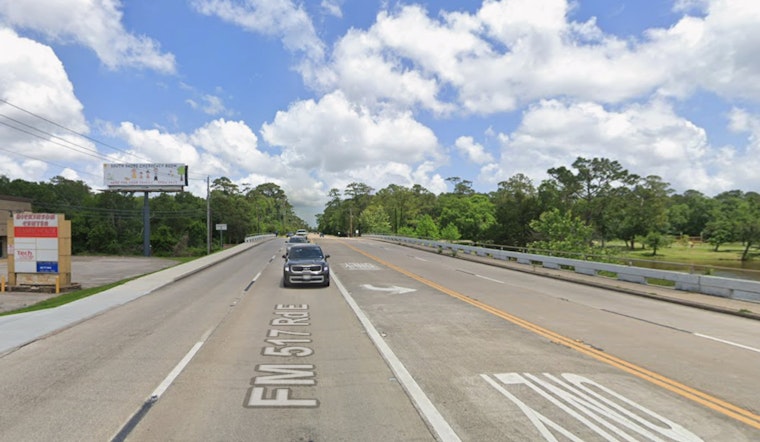
On the last night in Dickinson, a man who sleeps in the woods near Dickinson Bayou grabbed his canoe and turned into an unlikely lifesaver, rescuing a mother and her infant after their minivan plunged off the FM 517 bridge and into the water below.
Officials said he paddled out to the partially submerged van, pulled the woman and baby to safety, and brought them back to shore. Both were taken to The University of Texas Medical Branch in League City and are expected to be OK. Dickinson police and volunteer firefighters later recovered the vehicle from the bayou.
How the rescue unfolded
According to KTRK/ABC13, the crash happened around 9:40 p.m. Thursday on FM 517. The driver told first responders she hit a curb on the bridge, then veered across several lanes before the minivan went over the edge and into Dickinson Bayou.
A man who stayed in a wooded area nearby saw what happened, jumped into his canoe, and paddled out to the van, KTRK/ABC13 reported. He managed to bring both the mother and her baby back to shore, where medical crews took over and later transported them to the hospital in League City.
Where they were treated
Officials said the mother and infant were taken to the League City campus of The University of Texas Medical Branch for evaluation, and that neither suffered serious injuries. The hospital at UTMB Health's League City campus runs a 24-hour emergency department and serves as a regional care hub for crashes from the Clear Lake and Galveston Bay areas.
Response and recovery
The Dickinson Volunteer Fire Department used its boat to take a tow truck driver out to the submerged van so it could be hooked and pulled from the water, while Dickinson police officers were already on scene by the time the rescuer reached the shore, KTRK/ABC13 reported. Officials said the cause of the crash is still under investigation.
Authorities described the rescuer only as a man who stays in a wooded area near the bayou and did not immediately release his name. The incident is a stark reminder that when things go wrong on the water, the first help on scene is often a nearby neighbor or volunteer, not someone arriving in a marked vehicle with lights and sirens.





