

























































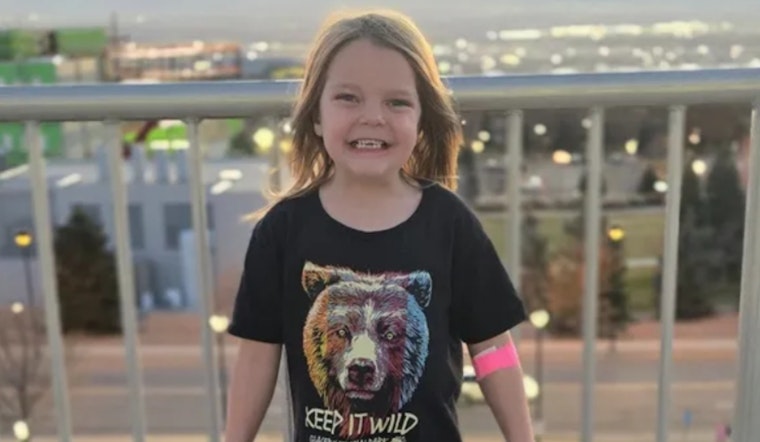
Six-year-old Valerie Jensen of Idaho Falls is at the center of a medical mystery, as the entire right side of her body steadily shrinks while specialists work to figure out why. Her family says she has been losing muscle, bone growth, and skin on that side, with changes that include bruising, patchy brown skin, a purple-colored toe, and what her mother describes as a "skeleton-like" right foot. The baffling condition has turned into near-weekly trips to Salt Lake City and a growing stack of medical bills, so the Jensens have launched a fundraiser while doctors enroll Valerie in a University of Utah research study to comb through her DNA for chromosomal or tiny letter-level abnormalities.
According to her mother, Katelynn Jensen, the ordeal began in September when Valerie started complaining of leg pain. That discomfort evolved into a nightly limp and visible bruising, and only then did the muscle wasting start to show. Early workups for blood disorders and leukemia came back negative, and an orthopedic evaluation at Primary Children's found that Valerie's right leg is already about an inch shorter than her left. Dermatology specialists have also flagged patchy brown, scaly spots on her skin. The family told East Idaho News that they have been shuttling between Idaho Falls and Salt Lake City almost every week while both parents take unpaid time off work to keep up with the appointments.
Doctors recommended Valerie be seen at Primary Children's Hospital in Salt Lake City, the region's pediatric specialty center affiliated with the University of Utah. There, she has been evaluated by orthopedics, dermatology, and rheumatology, while clinicians order imaging and additional tests. University of Utah Health notes that Primary Children's serves as the pediatric teaching hospital for the U of U School of Medicine and manages complex referrals from across the Intermountain West, which now includes Valerie's case.
Her medical team has also signed her up for a research program at the University of Utah that will analyze her DNA for missing chromosomes or subtle letter-level changes, a process her mother says could take years to complete. The family says doctors have started evaluating Valerie's brain as well, looking for left-brain issues that might explain hemiatrophy and her new struggles with handwriting and reading, according to East Idaho News.
What Hemiatrophy Means
Hemiatrophy, or the underdevelopment or shrinkage of one side of the body, is rare and can signal a range of underlying problems, from genetic syndromes to neurocutaneous disorders and structural brain abnormalities. Medical literature describes conditions such as progressive hemifacial atrophy, also known as Parry-Romberg syndrome, and certain neurocutaneous syndromes that can show up with one-sided skin changes, muscle wasting, and matching brain findings on imaging. Background on those patterns is detailed by MedGen and in a recent review of progressive hemifacial atrophy on PubMed.
Fundraising and the Family Toll
To help manage the cost of imaging, travel, and even needed vehicle repairs, the Jensens started a GoFundMe campaign in December. The fundraiser had collected about $4,860 toward a $5,000 goal at the time of reporting, according to GoFundMe. In the campaign description, Katelynn writes that Valerie now needs a team of specialists and frequent testing, and that the out-of-pocket costs are mounting. The page lists Katelynn Lopez Jensen of Idaho Falls as the organizer and includes photos along with her first-person account of her daughter's battery of tests and appointments.
Genomic sequencing and rare-disease workups often involve long stretches of analysis and repeated follow-up visits, which can add both time and expense for families. A study of clinical genomic programs in the Journal of Clinical and Translational Science found that access and cost barriers can be significant. For now, Valerie remains under multidisciplinary care while doctors keep chasing imaging and genetic clues that might finally explain why one side of a 6-year-old's body is changing.





