

























































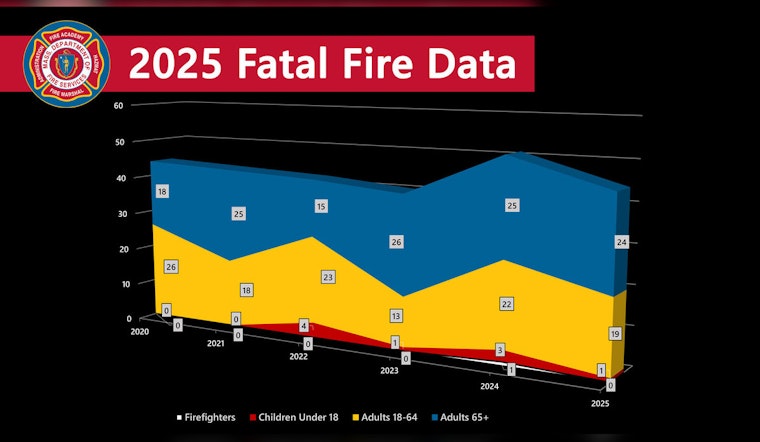
Fire fatalities in Massachusetts have seen a notable decrease in 2025, marking a 12% decline from the previous year. In a report released by the state's Department of Fire Services, State Fire Marshal Jon M. Davine detailed that there were 44 fire deaths over the course of 30 fires, down from the 50 deaths recorded in 2024. This decrease brought the state's numbers in line with the five-year average. Most of the deaths occurred in residential settings, with single-family homes being the most common site of such tragedies, as mentioned in the press release of the Commonwealth of Massachusetts.
The greatest loss of life occurred at the Gabriel House Assisted Living in Fall River, with a fire there claiming 10 lives—a stark reminder of the vulnerabilities certain populations face. The elderly, making up roughly 17% of the state's population, represented nearly 55% of all fire deaths. The report indicated that smoking materials were the leading cause or contributing factor in nearly half of the fatal fires, a trend that has persisted for years. According to the statement obtained by the Department of Fire Services press release, a concerning issue is the non-operational state of smoke alarms in many of the homes where deaths occurred.
Smoke alarms played a key role in the survival rate of residential fires. Provisional data showed that, of the 40 residential fires with fatalities, only 16 homes had working smoke alarms. In an effort to increase awareness and safety, the state has updated its Home Oxygen Fire Safety brochure and made it available in several languages, signaling a commitment to preventing future tragedies, especially those involving medical oxygen which has proven particularly hazardous when combined with smoking.
An anomalous spike in the data was noted in July, attributed primarily to the incident at Gabriel House, marking it as an especially deadly month despite fatal fires being more common during the winter period. November followed as the second-deadliest month, with nine recorded fatalities. Further details from the report highlighted the danger fires pose at night, with incident spikes noted between 9:00 pm and 4:00 am. State Fire Marshal Davine emphasized the need for functioning smoke alarms given the modern construction materials and furniture that can exacerbate the spread and toxicity of fires. Davine said, "Changes to building construction allow fires to grow and spread faster. Synthetic furnishings create deadly smoke and toxic gases as they burn. The US Fire Administration estimates that we have less time to escape a fire at home than ever before, so it’s vital to have working smoke alarms to alert us to the danger before it’s too late," according to the same press release.
Despite the decline in deaths, the report serves as a stark reminder of the ongoing risks posed by fires and the importance of preventive measures such as the correct disposal of smoking materials and the maintenance of functional smoke alarms. The Department of Fire Services continues to underscore the critical nature of fire safety education and infrastructure in safeguarding Massachusetts' residents.





